Kameleo Review 2026: Pricing, Tests & Best Alternative
Try Gologin for free

Today I will look at Kameleo, a privacy browser developed by Outis Nemo Ltd in Hungary. It offers different browser identities and local profiles without a numerical storage cap, alongside cloud profile synchronization. Kameleo also claims to have the best canvas fingerprinting.
I reviewed Kameleo earlier but a lot has changed since then. Product has gotten significantly better as per their release notes. There is a free plan now along with a better and more advanced profile editor which makes Kameleo more accessible than it was when we first reviewed it. So, is Kameleo now worth buying for your business in 2026? This blog explores Kameleo and compares it against the market leading alternative: Gologin.
TL;DR:
| Comparison point | Kameleo | Gologin |
|---|---|---|
| Paid starting price | Startup: €59/month; €45/month with annual billing for 10 concurrent browsers, 5,000 cloud profiles and no monthly runtime cap | Professional 10: $9/month; $4.50/month with annual billing for 10 stored profiles; cloud browsing on every paid plan |
| Free access | 2 concurrent browsers; 100 cloud profiles; 3 team members; 300 browser minutes/month cap | 3 free profiles; fingerprint customization; no monthly browser-runtime cap; 7-day trial of paid features |
| Tested core | Chrome 156; Kameleo app 5.3.1 | Chrome 154; Gologin V4.42.5 |
| Launch observations | App launch: 7–8 sec; Profile launch: 12 sec; Second launch 3 sec | App launch: 3-4 sec; Profile launch: 2 sec |
| Browser profile tests | Iphey: Failed, Pixelscan: Passed, CreepJS: Passed (19% like headless) | Pixelscan: Passed, Iphey: Passed, CreepJS: Passed (19% like headless) |
| Desktop platforms | Windows and macOS desktop apps; Linux/Windows Docker deployment | Windows, macOS and Linux |
| Mobile | No mobile app | Android and iOS app |
| Cloud use | No cloud browsing, only cloud profile data sync | Cloud browsing and profile data sync |
| Proxies | Bring your own proxy; purchase traffic separately | Free 2 GB residential proxies on every paid plan; Integrated and external options |
| Team access | 3 members on Free; no paid seat cap; concurrency shared | Profile shares on every paid plan; 1 team member from Business, $10/month per extra member |
| API | Local API on Free (60 RPM) | REST API and SDKs on every paid plan (300 to 1,200 RPM) |
Kameleo Browser: What’s New In 2026?
Kameleo has been around since 2017 with major upgrades and revamps. Alongside tools for managing separate account sessions, it offers API access, SDKs and Docker deployment for developers.
The current paid plans are Startup, Business and Enterprise, priced primarily by concurrent browsers. That means the number of profiles running at once, rather than the number saved in storage.
Local Profiles
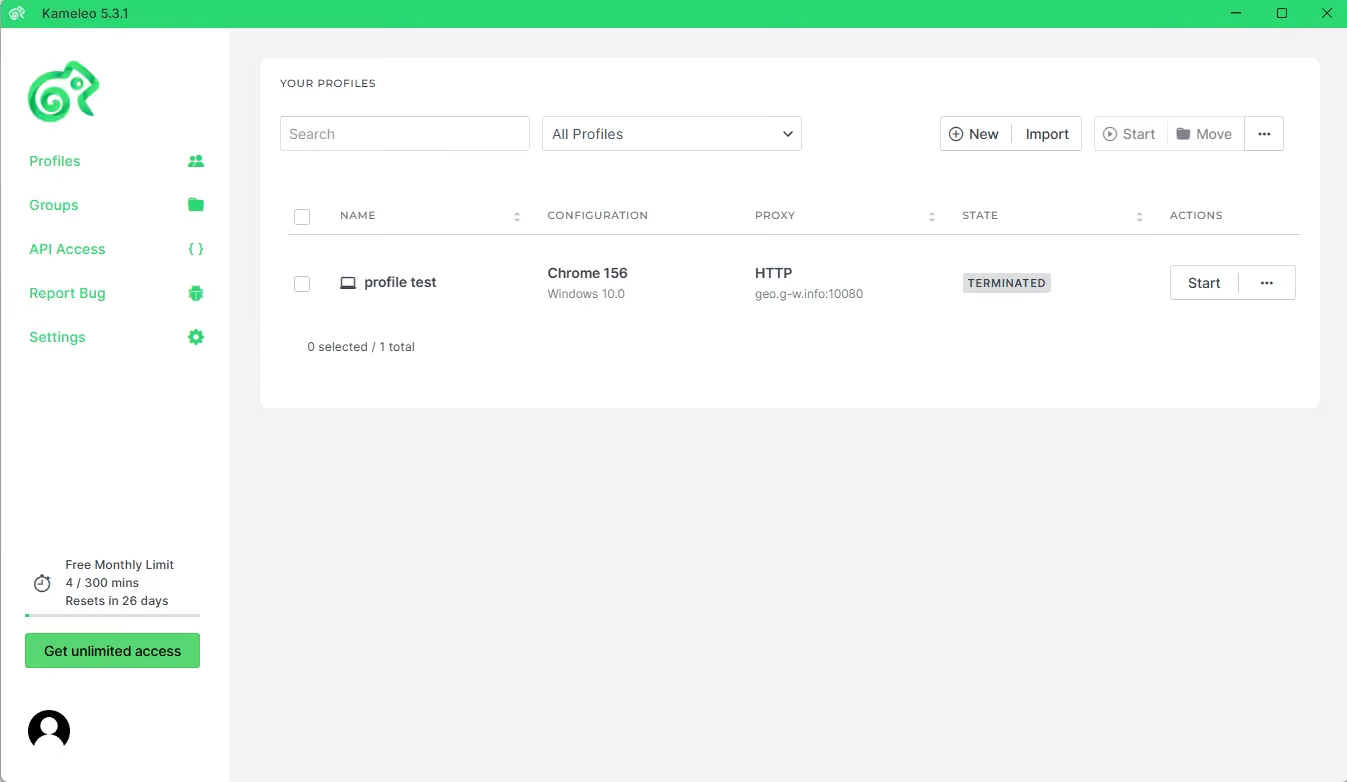
Kameleo offers local profiles with no count limit on all plans. Local profiles stay on the device while the cloud profiles synchronize cookies and session data for use on another computer. Cloud profiles do not mean they run on Kameleo’s cloud infrastructure. They still run on your device and utilize your desktop’s resources. Kameleo syncs the profile data to the cloud so you can access it from another device.
Kameleo uses two engines, Chromium-based Chroma and Firefox-based Junglefox, to present Chrome, Firefox, Edge and Safari (MacOS only) browser identities. Kameleo defaults to Chrome for browser profiles unless you specifically select another engine during profile creation.
This approach gives developers and experienced users control over storage and browser configuration.
Mobile App and OS support
Kameleo’s native Android app stopped functioning on September 28, 2025. Kameleo’s emulated mobile browser feature offers mobile emulation through the desktop app. Mobile emulated browser profiles are not cloud phones unlike Gologin which provides a complete Android cloud phone in your desktop app.
Kameleo now includes mobile browser emulation on Free. Kameleo’s free plan now includes 2 emulated mobile browsers. You can evaluate mobile browser emulation on Free, within its two-browser and 300-minute monthly allowances.
Kameleo has Windows and macOS desktop apps, plus an official Docker option for automation.
Comfort Of Use
Kameleo’s latest app is clean and simple. You can create profiles using default settings without needing to configure the complete fingerprint. Its local API, SDKs and two engines make it particularly relevant to developers, although manual users can create profiles through the profile editor on desktop apps.
Proxy traffic comes from an external provider, but time zone, geolocation and WebRTC can follow the proxy automatically. You don’t have to manually match the geolocation and timezone settings to your proxy anymore.
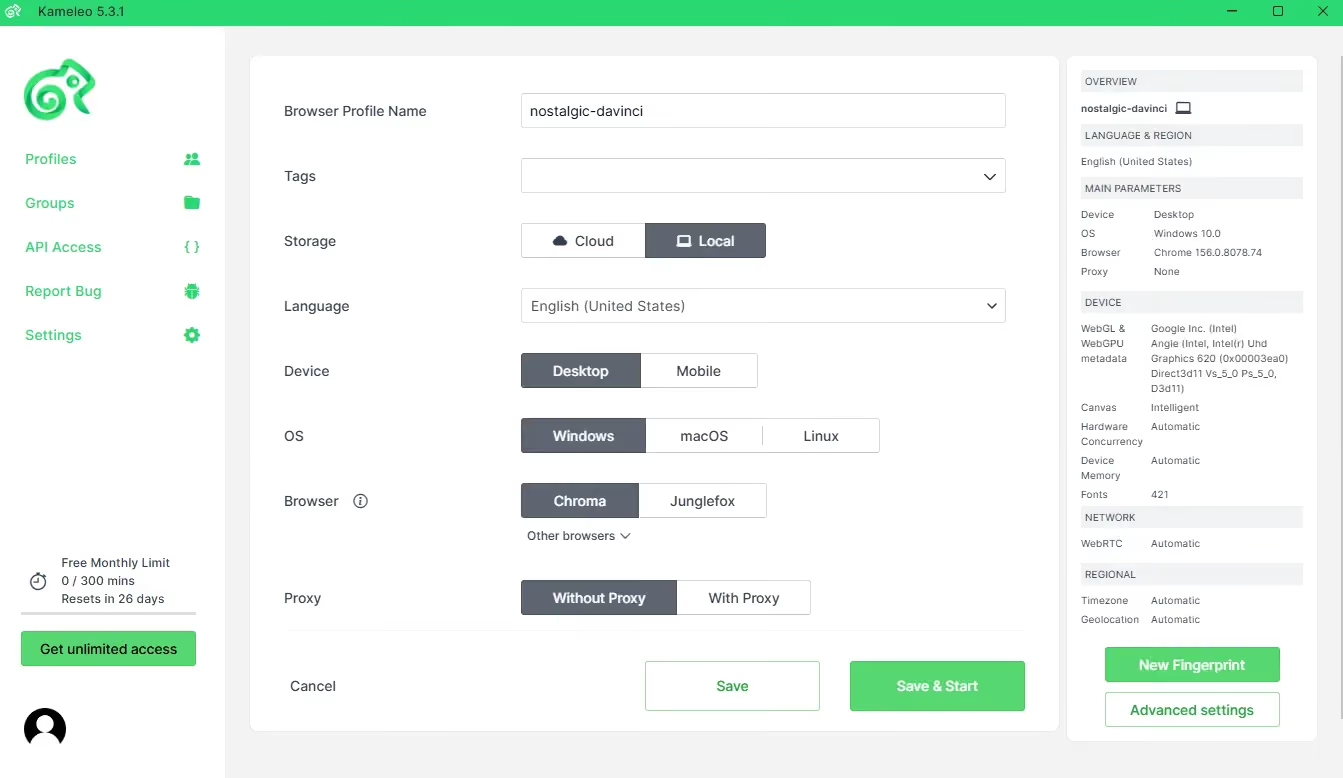
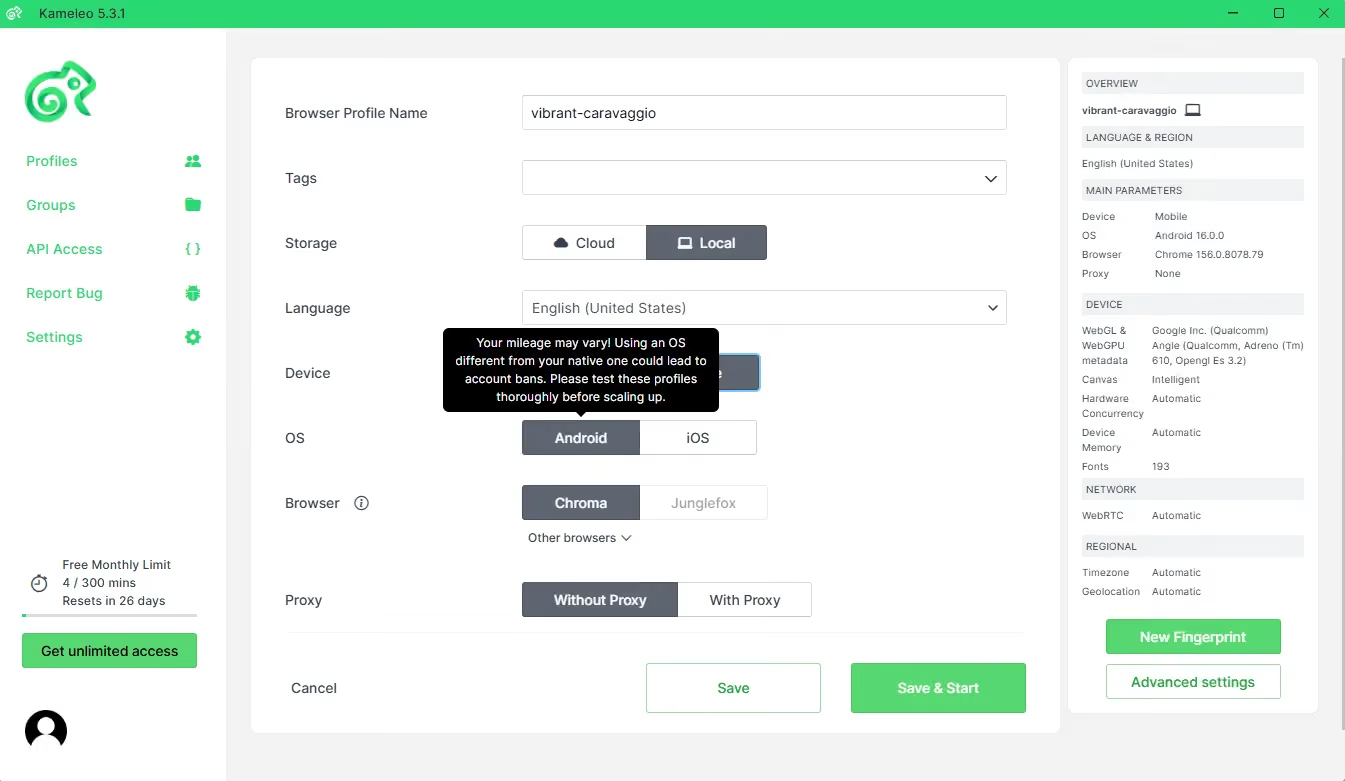
The current editor creates a configuration from your selected device, operating system and browser; you can request a new fingerprint or open advanced settings. I could choose local or cloud storage and use Save & Start without configuring every fingerprint parameter.
The available controls are useful, although beginners still need to understand storage, browser choice and concurrency.
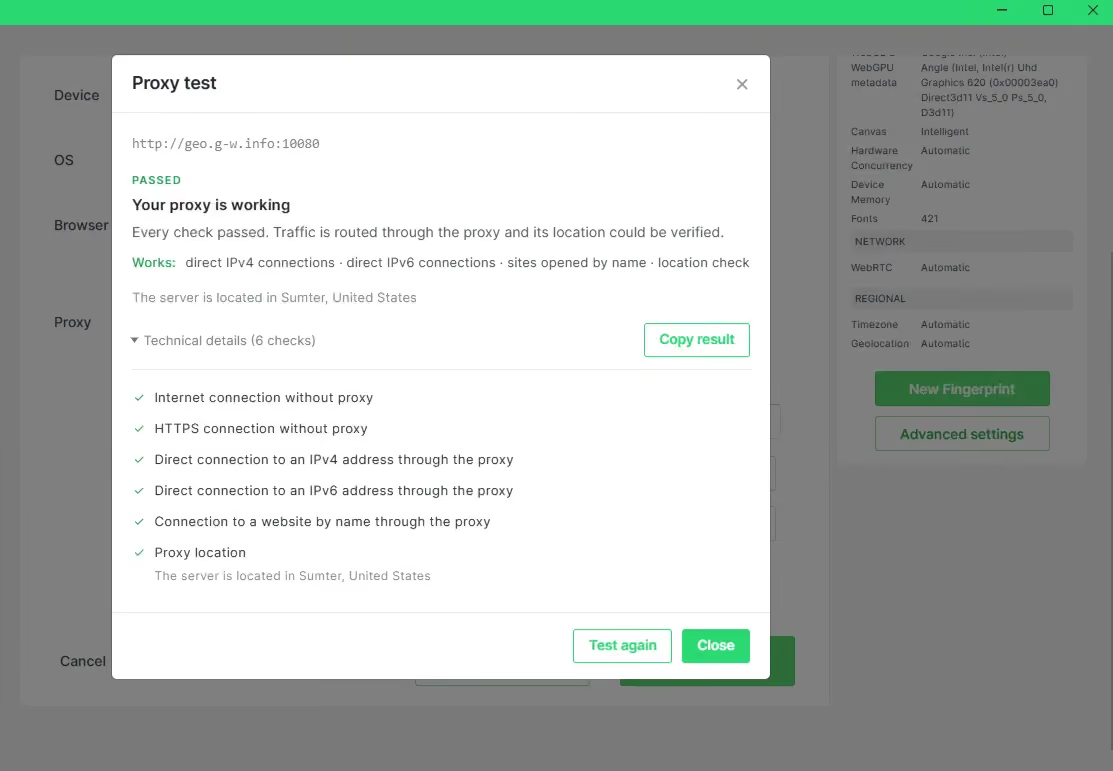
For an external proxy, choose ‘With Proxy’ and enter the proxy credentials. The proxy check verifies the connection before launch; leave regional controls on Automatic and choose a language suited to the proxy country.
Mobile Browser Emulation, Teams and Automation
Kameleo can emulate Android and iOS browser profiles from the desktop. This means you can create a profile that sites will see as a browser on an Android smartphone (with a mobile browser). This provides a mobile browser environment rather than a complete phone, so it does not run native Android apps.
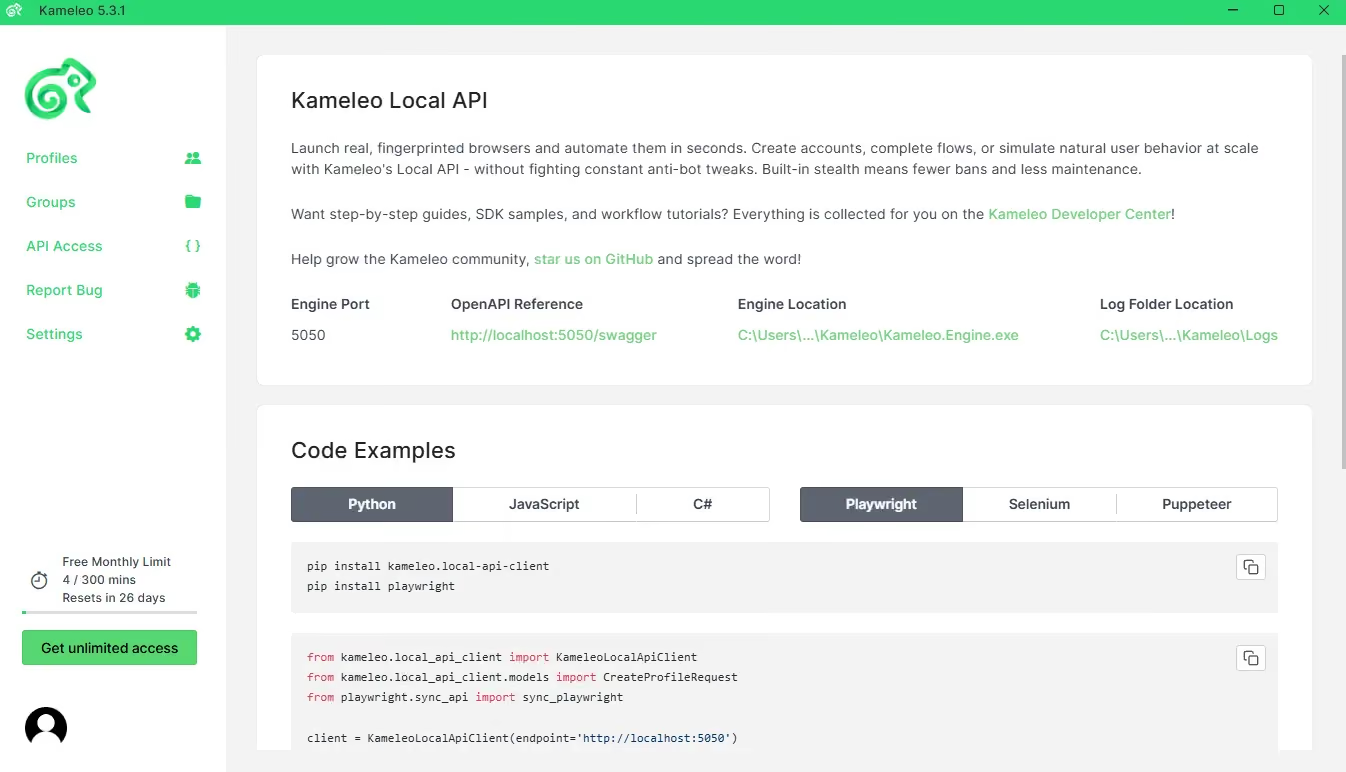
Kameleo supports Selenium, Puppeteer and Playwright, with a local API and SDKs for Python, JavaScript and C# if you want to use Kameleo’s profile fingerprinting through your code automations.
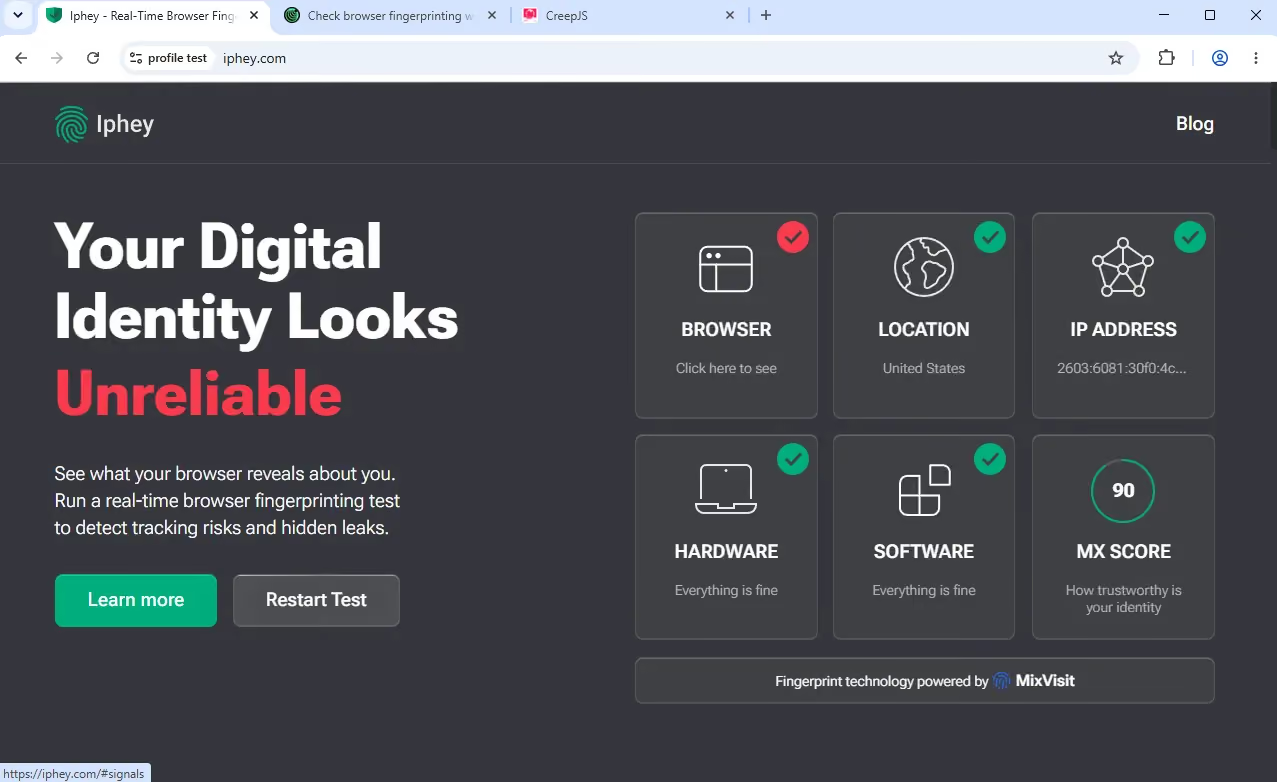
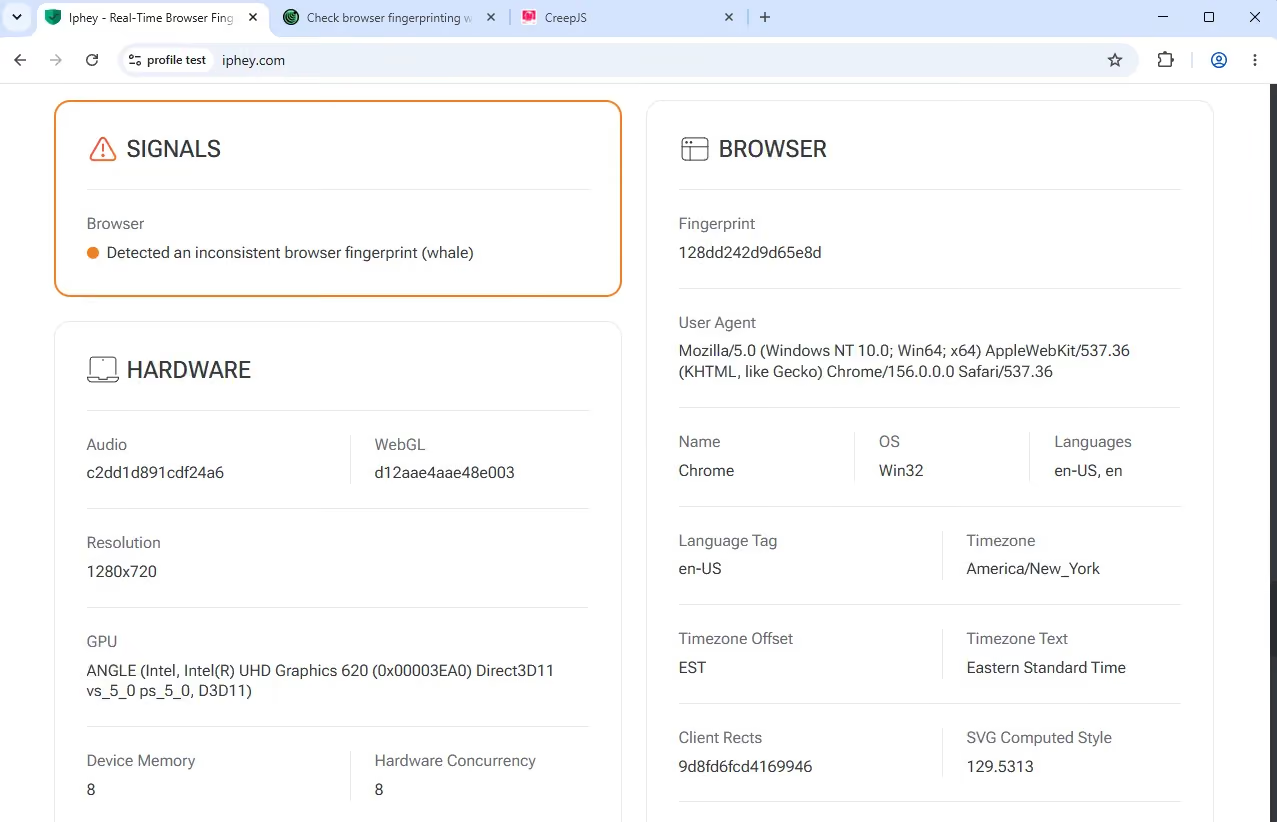
Kameleo Free includes three team seats in total, including the account owner, for sharing cloud profiles. Team members can resume the same cloud profile and session data, while the team shares the two-browser concurrency limit. This is an excellent addition to Kameleo’s free tier. However, Iphey marked the browser fingerprint Unreliable in this run, so I would test the intended workflow before relying on these profiles for business work.
Support, Updates & Reviews
There is a ‘Report bug’ option in your desktop app to report any issues with UI or fingerprint creation. There is no option in their desktop app to contact customer support or AI agent.
The desktop app’s Help Center button opens Kameleo’s website, where you can access its AI assistant. To reach a human support agent, escalate your request through the website.
Kameleo provides human support Monday–Friday, 08:00–16:00 CET, and states a response target of 24 hours on working days.
As of November 2026, Kameleo has 3.0/5 from 63 Trustpilot reviews. A May 2026 Trustpilot reviewer reported proxy-related failures on an M2 Mac and complained about support and refund handling; this is an individual report, not our Windows test finding.
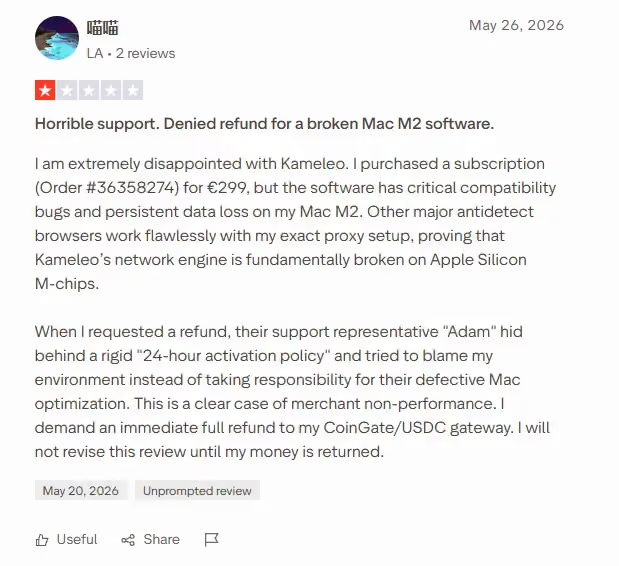
Some positive reviews praise customer support, usability and the cloud-profile workflow. The reviews cover different product versions and workloads, so I would not treat them as proof of current performance.
On other platforms like G2 and Capterra, there are no solid reviews to make any conclusions from.
As per Kameleo’s release notes, the last app update (5.3.1) came out on September 30, 2026, and the Chroma 157 browser kernel on November 3, 2026.
Kameleo’s Pros and Cons
| Pros | Cons |
|---|---|
| Free access to two engines, mobile browser emulation and the local API | Running profiles share 300 browser minutes per month |
| Local storage and cloud synchronization with group roles | Cloud storage does not provide a hosted running browser |
| Automatic regional settings and a connection check | Purchase proxy traffic separately |
| No team-seat cap on paid plans | All team members share the concurrent browser allowance |
| Pixelscan: Consistent; CreepJS: 0% headless and 0% tampering | Iphey marked the tested browser fingerprint Unreliable at 90/100 |
Kameleo Browser Profile Quality Tests
Kameleo provides detailed controls for many browser fingerprint parameters. In advanced settings you can adjust canvas, WebGL, audio, fonts, geolocation, user agent and languages. I tested the profile fingerprint quality by running tests through Iphey, Pixelscan and CreepJS.
How we tested
On November 4, 2026, I tested fresh Windows desktop profiles in Kameleo 5.3.1 using a FloppyData residential proxy connection. The checkers were Pixelscan, Iphey and the official CreepJS page, following the checker selection in our browser comparison methodology.
The tested Kameleo profile reported Chrome 156. I created a fresh profile (no customization, everything set to default) and ran my tests. Here are the results.
Iphey Test Results
Iphey returned Unreliable with an MX score of 90/100. Iphey labelled the browser category inconsistent, while location, IP, hardware and software were green.
Pixelscan Test Results
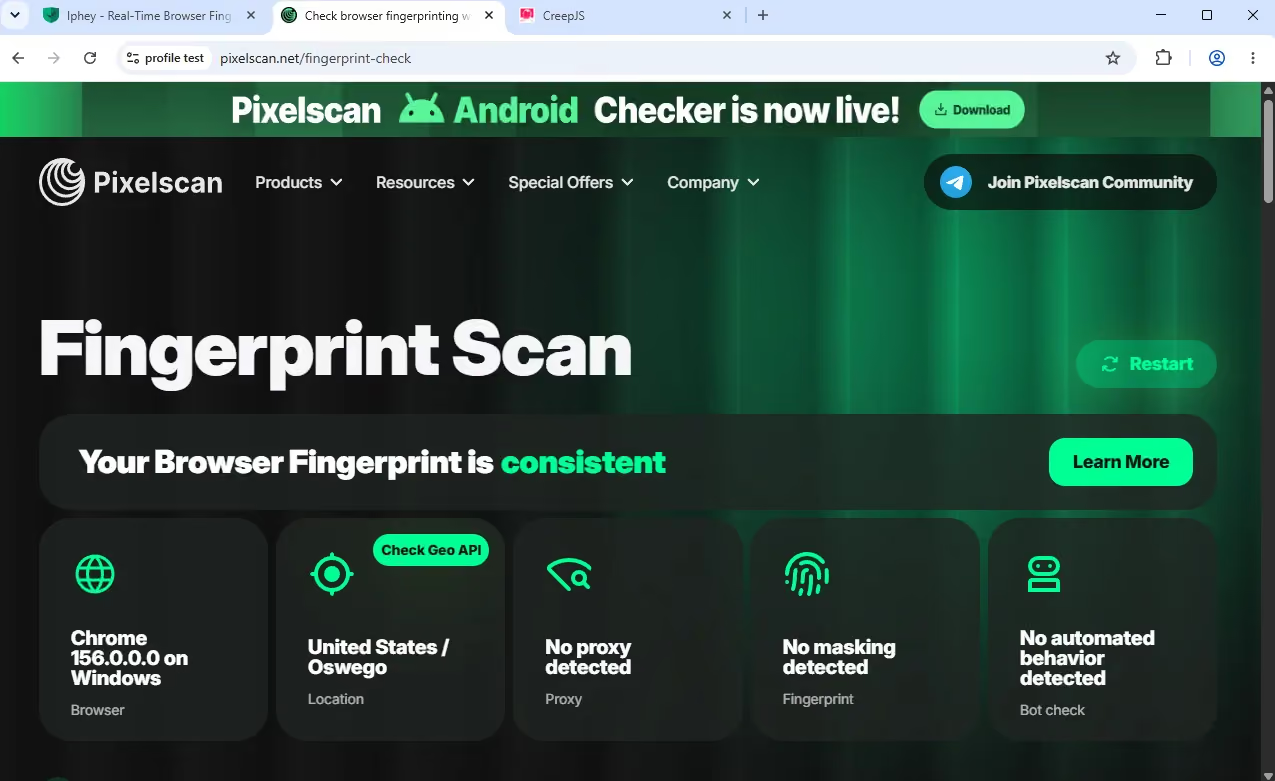
Pixelscan reported Chrome 156, matching the tested profile’s version in the other captures. The profile’s regional settings matched the proxy location in this capture. Pixelscan reported a ‘consistent’ browser fingerprint.
CreepJS Test Results
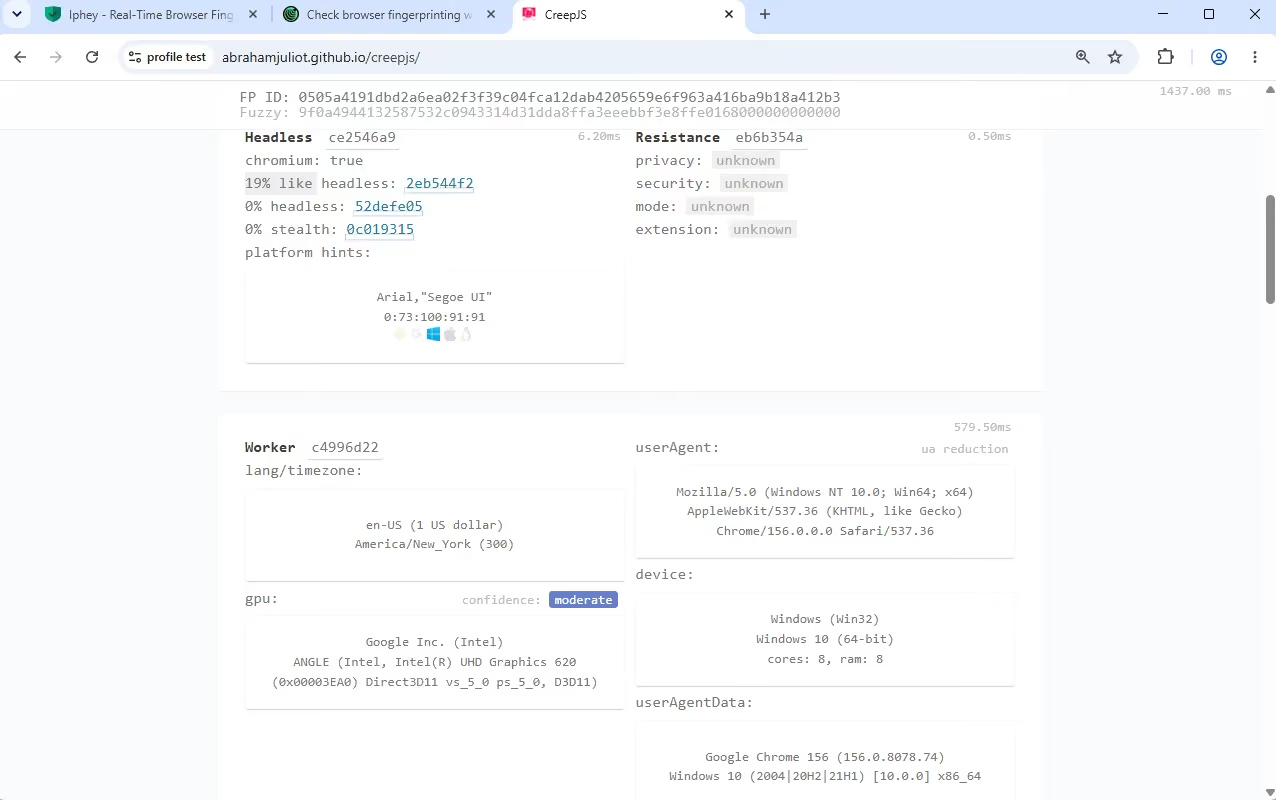
Official CreepJS recorded 0% headless, 0% tampering and 19% like headless, with Chrome 156 in the worker panel. The 19% is a set of browser-feature checks, not a probability of automation or an overall safety score.
Gologin: A Better Alternative to Kameleo
Disclosure: Gologin publishes this review. I try to stay objective and talk about facts and numbers. I encourage you to run your own tests and compare the allowances that matter to your work.
I prefer Gologin for everyday account management and integrated proxies, while Kameleo has useful advantages for developers. The same-day test results and plan limits explain the trade-offs.
Although Kameleo’s free plan looks packed with better options, there is a hard 300 minute usage cap on browsing. Once the shared 300-minute allowance runs out, you must wait until the next monthly reset or upgrade. Gologin has affordable prices and advanced functionality in comparison.
Features and UI: What’s New In 2026?
Gologin has a cleaner profile dashboard. Although Kameleo’s current interface is also more usable than the last time I reviewed it, the practical question is which workflow takes fewer steps for your daily tasks.
In 2026, Gologin allows users to create both a new profile and a new proxy with just one click. A massive time and stress saver compared to technicalities of almost any competitor, including Kameleo. Gologin now integrates proxy selection in the app.
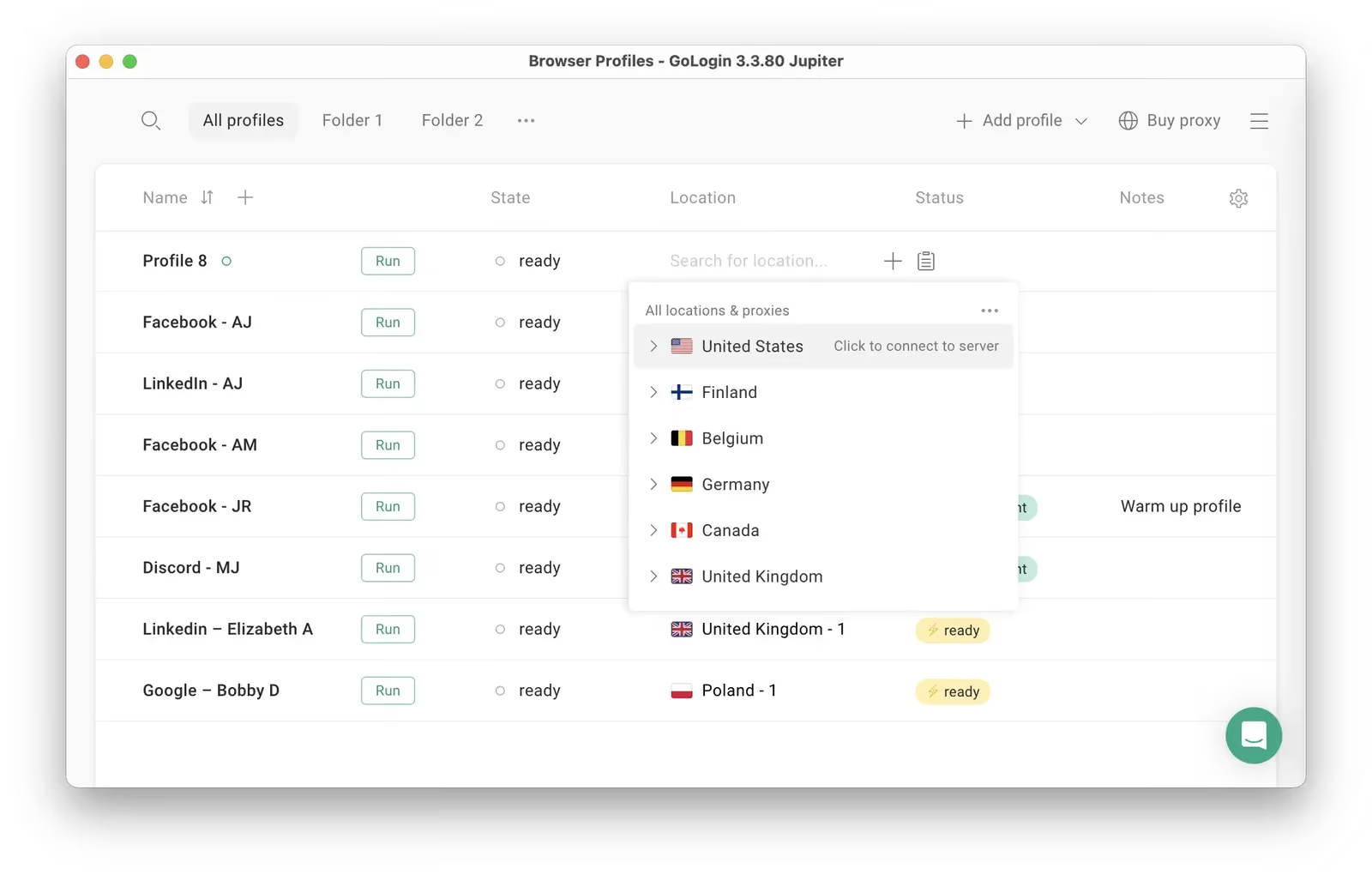
You can now create a profile and assign a proxy in seconds – one click for each action.
However, Gologin does not compromise on advanced functionality. Sophisticated settings and features are there, but you can skip these if you want: it will still work as it should.
Gologin offers:
- Free 7-day trial
- Forever-free plan
- One click profile and proxy creation
- Native Android and iPhone/iPad apps; cloud browsing on every paid plan
- 2 GB of residential proxy traffic on every paid plan
- Affordable solo and team plans
- 24/7 support access.
This is not a complete list of what Gologin includes in the price. Feel free to test it all during the 7-day trial! No credit card needed.
Proxy Integrations
Gologin now has built-in proxies, backed by a trusted US-based provider. You can get a new IP for your profile literally with one click. Every paid plan includes 2GB residential proxy usage for free. Extra traffic comes in 10 to 100 GB bundles at $1.19 to $1.59 per GB; third-party providers set their own prices.
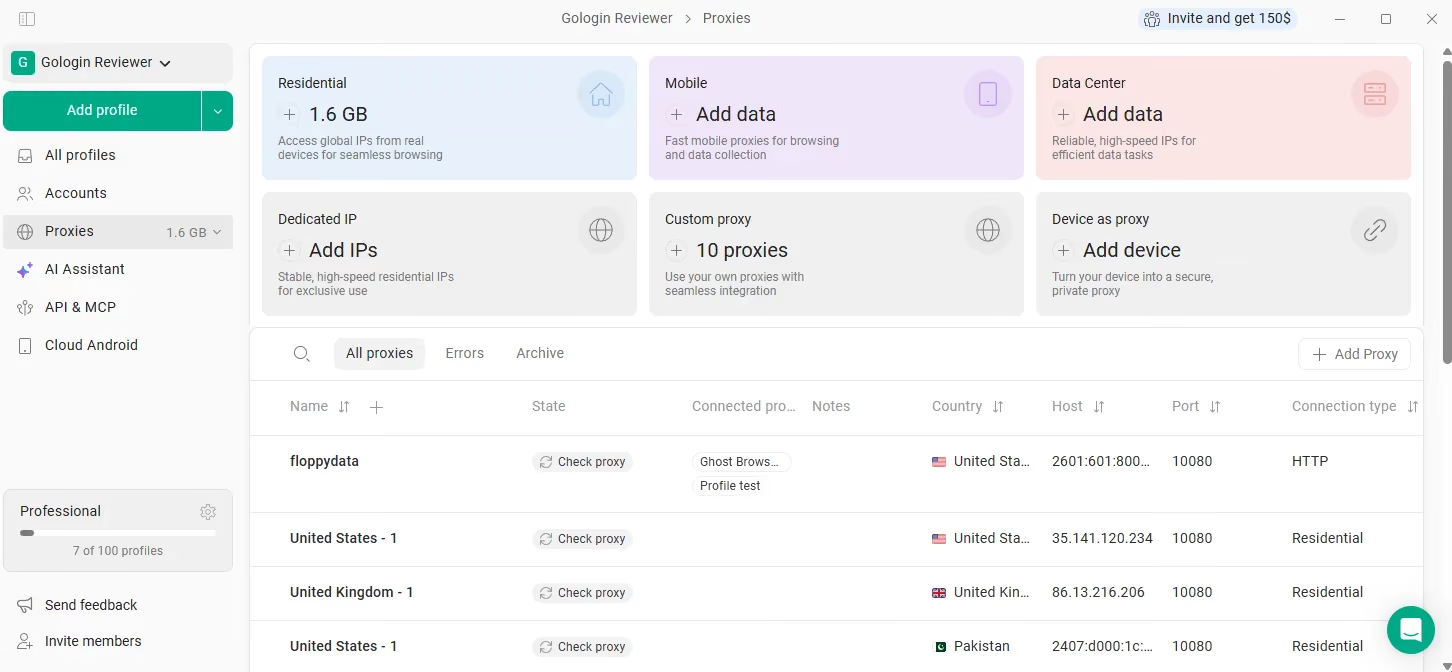
Mobile App & Web Version
Let’s cut to the chase. Gologin’s Android & iOS mobile app is:
- Accessible on all Gologin plans, including the free plan
- Works as a separate privacy browser, with no laptop connection needed.
Gologin’s web app provides hosted browser access on every paid plan. This gives Gologin users great mobility to travel or run around meetings. You can launch and edit profiles without computer access: they will work on a safe cloud server.
The web app is also a great fit for slower devices like old computers or tablets with low performance levels. Feel free to try the Android and web app during the free 7-day trial.
Support Quality & Reviews
The live chat team quickly responds to all user requests and tries to help in any situation 24/7. Gologin marketing managers collect customer feedback and suggestions, making browser updates as relevant as possible.
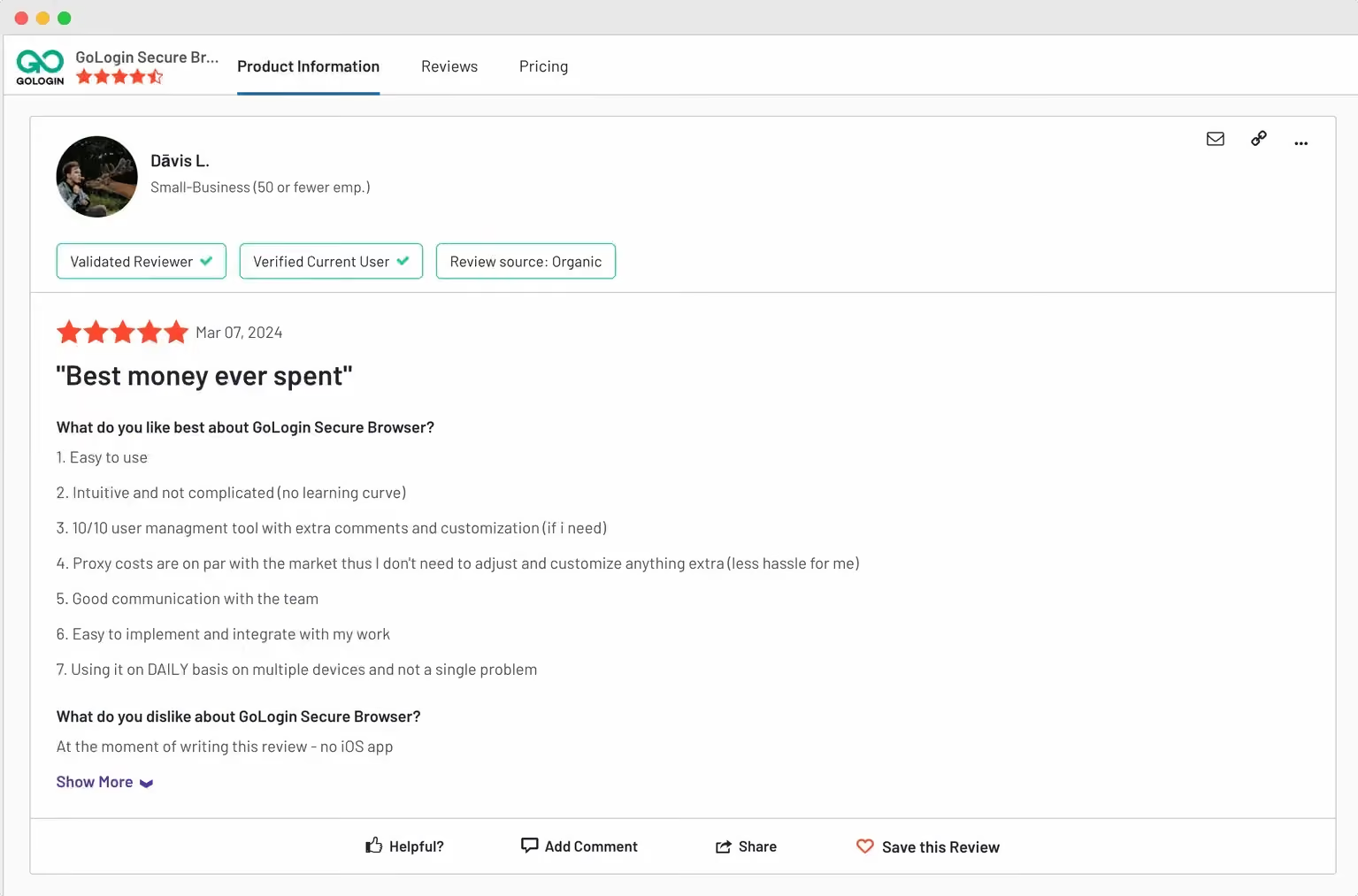
In their feedback Gologin users often say their problems were solved by chatting with the support team or through browser updates.
Updates frequency
The Gologin team updates the browser several times a month. Browser and application updates matter because website compatibility and fingerprint checks change over time. Gologin does everything necessary to keep user data safe and take client feedback into account. Updates are automatic: you just need to restart the browser.
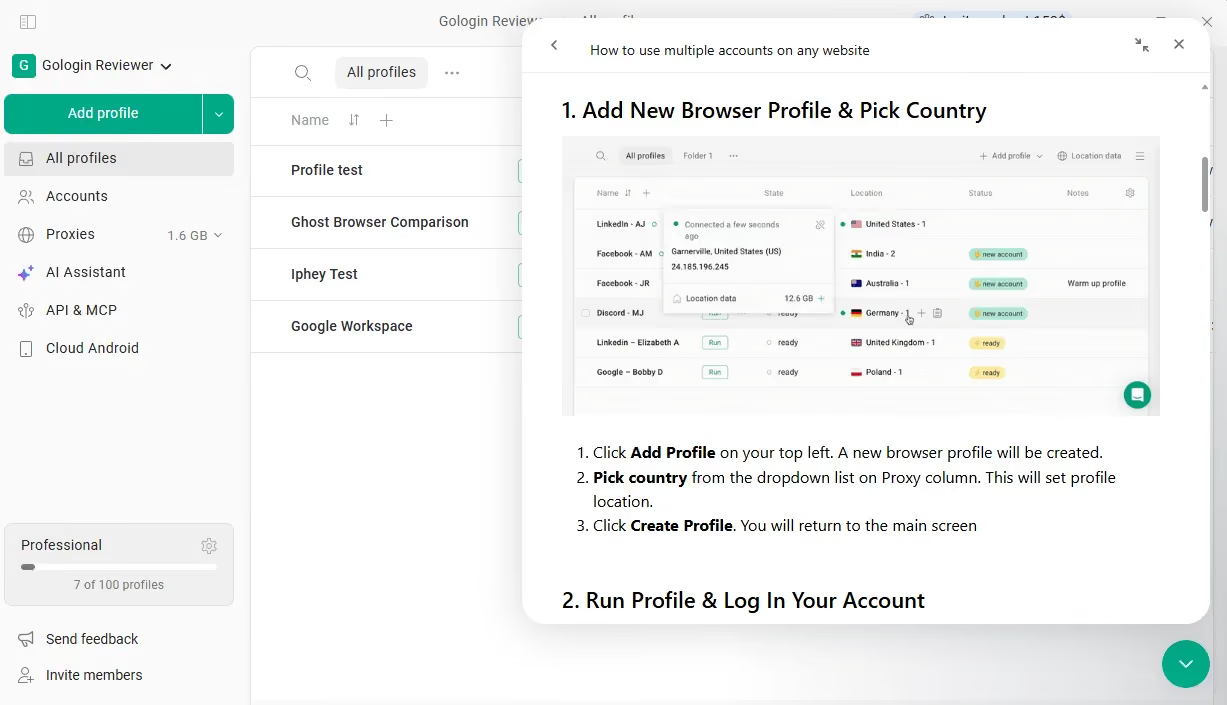
Gologin Browser Fingerprint Quality Tests
On the same date, I tested both Gologin and Kameleo using their latest desktop versions. I used the same Floppydata proxy for Gologin tests to compare the results and see which browser has a better profile quality.
On 4 November 2026, the tested Gologin profile ran Chrome 154, and the Kameleo profile ran Chrome 156. Gologin’s Chrome update is still pending.
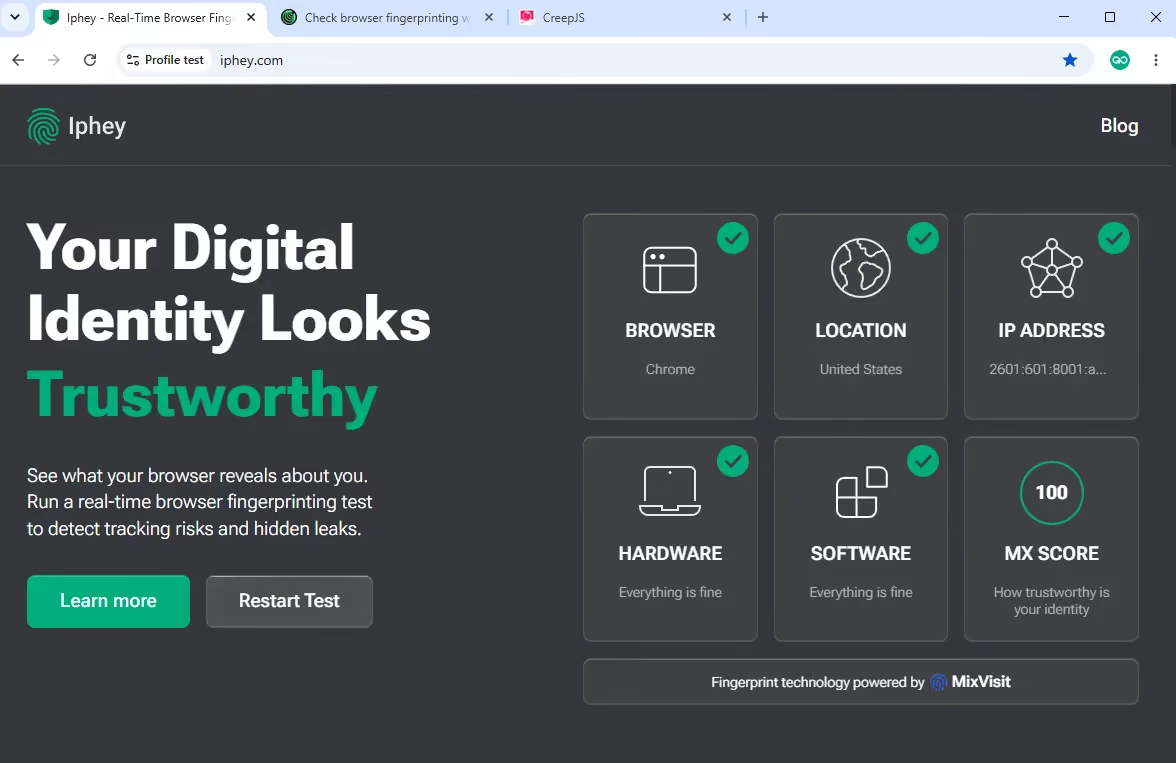
Iphey rated Gologin Trustworthy at 100/100, with every category green. This was the clearest difference from Kameleo’s Unreliable 90/100: Gologin avoided the browser-category warning in this run.
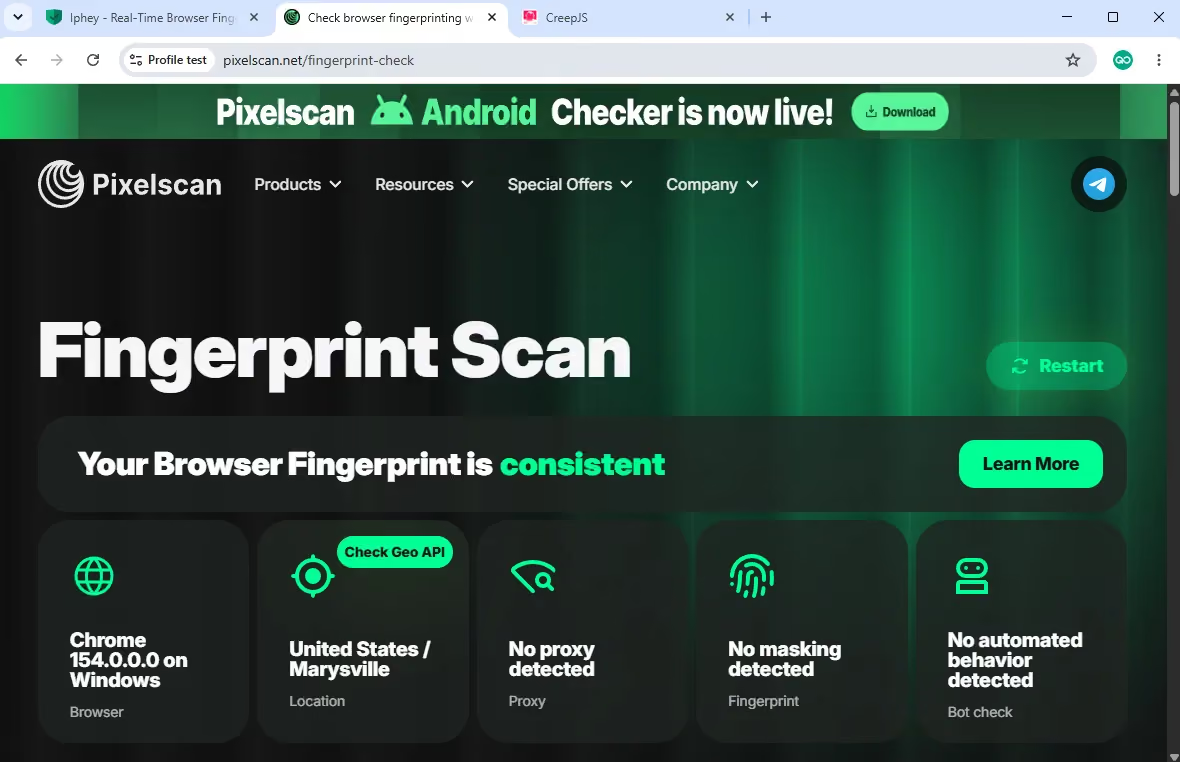
Gologin passed the Pixelscan test with ‘Consistent’ browser profile, no proxy classification or automation flag. Kameleo also passed this checker.
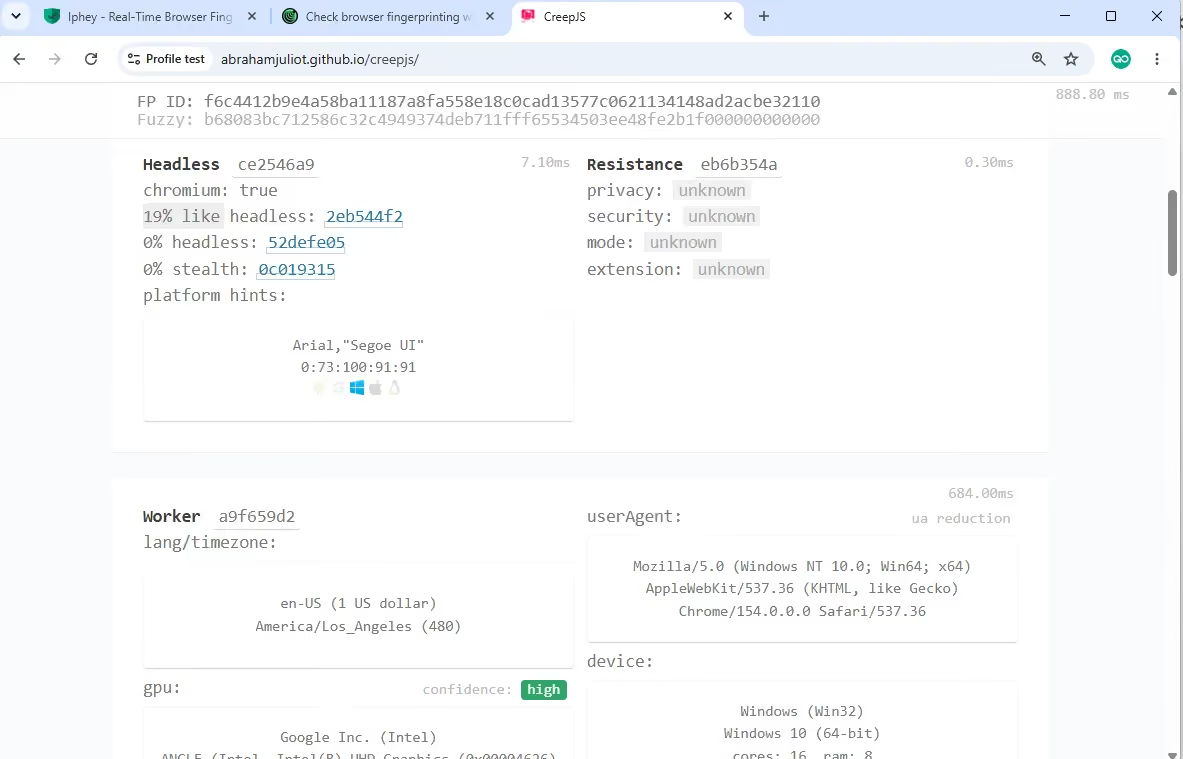
Gologin matched Kameleo at 0% headless, 0% tampering and 19% like headless. Its worker reported Chrome 154, so Kameleo had the newer tested core despite Gologin’s stronger Iphey result.
Kameleo vs Gologin: Pricing & Value Comparison
With Kameleo’s free plan in the picture, the competition between the two gets closer. Previously, Gologin came out as a clear winner since Kameleo’s profiles were not as good as Gologin and it did not have a free plan. Now that Kameleo has a very generous free plan, let’s compare which browser is a better value for money.
Gologin offers both: forever-free plan for 3 profiles + trial of paid features for 7 days. No credit card needed.
Free plans and trial periods
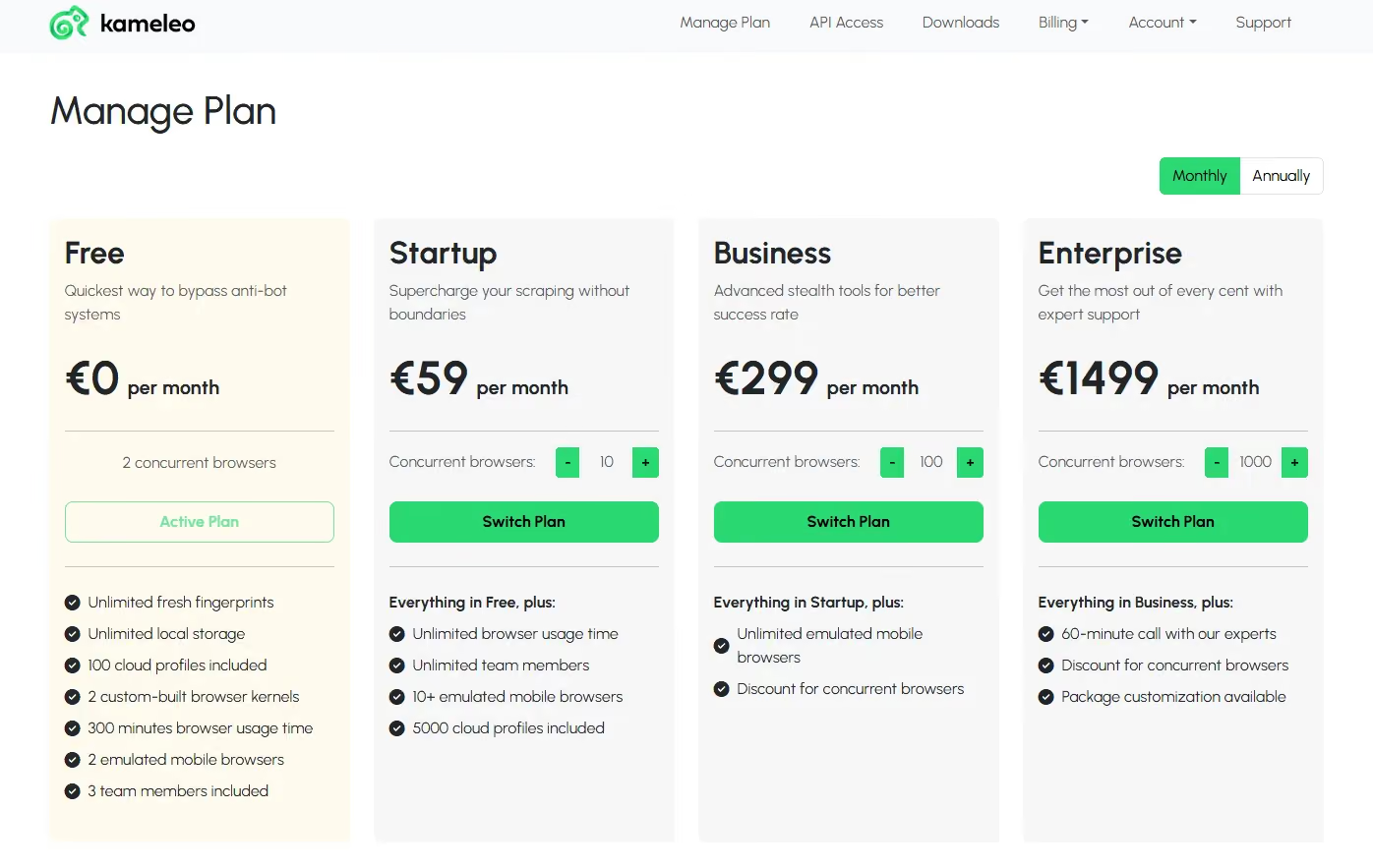
In Kameleo, Free includes two concurrent browsers, 100 cloud profiles, local storage without a profile-count cap, three team members and two mobile browsers. However, all these big numbers are nerfed by the fact that it is all capped at 300 monthly runtime minutes. After using that pool, you must upgrade or wait until the next monthly reset.
Gologin still offers its own forever-free plan for 3 profiles, plus a 7-day trial of paid features. Kameleo’s free tier is now more generous in raw numbers (100 cloud profiles vs. 3) but Gologin has no usage limit on the 3 browser profiles. You can use them as much as you want.
Paid plans
Kameleo has restructured its plans around Concurrent Browsers. This makes the head-to-head comparison hard. Kameleo has no limit on local profiles. There is a generous cap on cloud synced profiles as well. The only hard ceiling in each plan is the concurrent profiles you can launch simultaneously. This is because Kameleo is targeted at automation experts and developers who need to run several profiles at once.
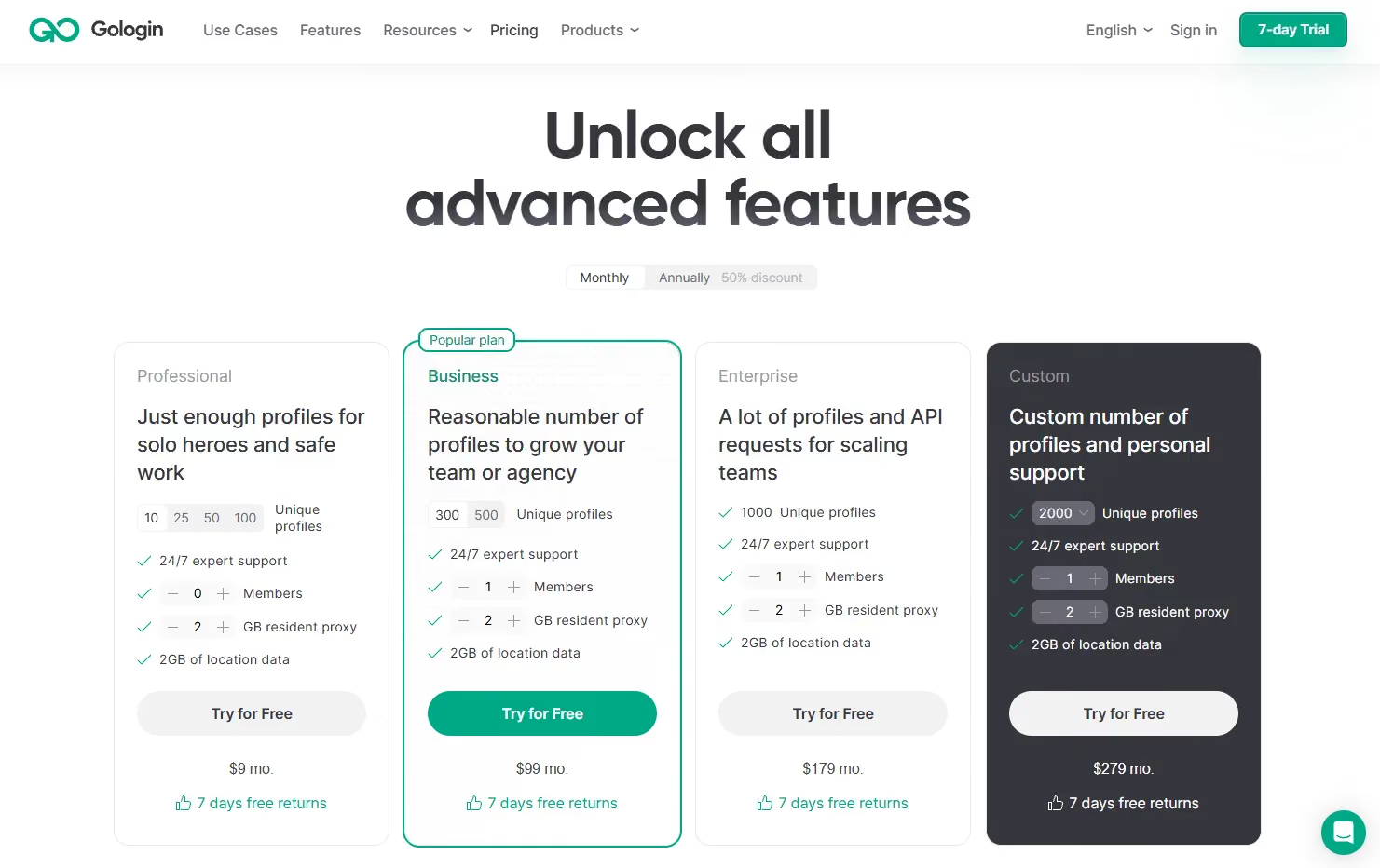
| Plan | Kameleo | Gologin |
|---|---|---|
| Free | €0: 2 concurrent browsers, 100 cloud profiles, 300 minutes/month, 3 team seats | $0: 3 profiles. Also offers a 7-day trial of paid features. |
| Startup / Professional | €59/month or €45 annually: 10 concurrent browsers, 5,000 cloud profiles, no runtime or team-seat cap, mobile emulation and import/export. | 10 profiles: $9/month or $4.50 annually. Larger selections: 25 profiles: $19/month; 50 profiles: $29/month; 100 profiles: $39/month. Includes 2 GB proxy traffic, cloud browsing, Cloud Android, mobile app and API |
| Business | €299/month or €225 annually: 100 concurrent browsers, 5,000 cloud profiles, team access and higher API capacity. | 300 profiles: $99/month or $49.50 annually. 500 profiles: $139/month or $69.50 annually. Includes 2 GB proxy traffic, profile sharing, cloud browsing, Cloud Android and 1 team member |
| Enterprise | €1,499/month or €1,125 annually: 1,000 concurrent browsers, 5,000+ cloud profiles, priority support and customization. | 1,000 profiles: $179/month or $89.50 annually. Includes 2 GB proxy traffic, cloud browsing and Cloud Android. |
Gologin vs Kameleo: Which One is Better Value?
Kameleo’s free plan limits usage at 300 monthly minutes. Even if they give me 1000 profiles on a free plan, they are of no use since I can only run them for 300 minutes per month. Gologin’s free plan is still a clear winner.
Kameleo does not have Android Cloud phones, or cloud browsing. Kameleo only provides cloud sync (to access your profile on another device or share it with someone). Gologin’s cloud browsing allows you to launch a browser profile in the cloud so you don’t put any load on your device, and can even access it from your phone.
Gologin’s Cloud Phone gives me real looking Android devices running in the cloud. I can install Android apps and use multiple Android phones on my desktop to manage separate accounts.
Gologin performed better on Iphey in this run, while both browsers returned Consistent on Pixelscan and matched the headline CreepJS percentages. I value consistent browser signals because I want to safely browse without putting my accounts at risk. These comparisons make Gologin a clear winner.
Kameleo Review Summary
- Kameleo has improved in 2026: a usable free allowance, desktop mobile emulation, team access without a paid seat cap and a clearer pricing model built around concurrent browsers. It remains relevant to developers, but automatic settings and the current editor make manual use easier; our latest run passed Pixelscan but received an Unreliable browser verdict on Iphey.
- Gologin remains the easier on-ramp for non-technical users, with one-click profile and proxy creation, built-in proxies from the entry tier, and a simpler mental model (pay for profiles you store, not browsers you run concurrently). It’s still the better fit if your priority is fast setup and minimal technical overhead, but Kameleo has closed real ground on price and generosity since our last review.
Here are some questions to help you choose the best browser for your situation:
- How many browser profiles do you need?
- Do you need to share profiles with partners?
- How much are you willing to pay for a program to work?
- Does the browser have a good reputation? What do reviews and forums say about it?
- Can you test the browser for free? If yes, which one suits you best?
FAQ
What is Kameleo Browser and who is it for?
Kameleo is a privacy browser for managing multiple accounts through isolated sessions and configurable device fingerprints. It serves marketers, e-commerce sellers, web scrapers, developers and users who need privacy or automation.
How does Kameleo Browser protect against fingerprinting and detection?
Kameleo offers advanced fingerprint customization—including Canvas, WebGL, AudioContext, timezone, and OS simulation—to make every browser profile appear as a unique real device. These settings can improve consistency between browser signals, but diagnostic results do not guarantee that a website will trust every profile.
Does Kameleo Browser offer a free trial or free plan?
Yes, Kameleo has a Free plan with two concurrent browsers, 100 cloud profiles, three team members and 300 shared browser minutes per month. Paid plans add runtime without a monthly minute cap, higher concurrency and profile/cookie import and export.
What platforms and browsers are supported by Kameleo?
Kameleo has Windows and macOS desktop apps and uses Chroma and Junglefox engines to present different browser identities. Kameleo emulates Android and iOS browser profiles through its desktop app; its former native Android app stopped functioning in September 2025.
Which use cases is Kameleo best suited for?
Kameleo excels in web scraping, e-commerce account management, social media management, ad verification, affiliate marketing, price monitoring, and development/testing environments. Its API, automation, and fingerprinting controls support both solo and team work on privacy-demanding projects.
What are the main drawbacks of Kameleo Browser?
Key limitations are the Free plan’s 300-minute runtime pool, external proxy costs, shared concurrency, no functioning native Android app, weekday human support and the browser warning in our Iphey test.