RoxyBrowser vs Gologin: Honest Review and Tests 2026
Try Gologin for free
TL;DR
- I tested RoxyBrowser and Gologin with fresh profiles and FloppyData proxies. Roxy’s first-use experience was frustrating: the app loaded slowly, got stuck and sometimes showed “failed to load resources.”
- Roxy starts at $8 per 30 days for 10 paid profiles, or $4.80 per month equivalent with a 360-day subscription. It now supports Linux and reported a newer Chrome core than Gologin in my tests.
- Roxy returned an Inconsistent Pixelscan result and an Unreliable 40/100 result on Iphey. Gologin returned Consistent on Pixelscan and Trustworthy 100/100 on Iphey. On official CreepJS, both recorded 0% headless and 0% tampering; Roxy showed 19% like headless, while Gologin ranged from 19% to 25% across recorded runs.
- Gologin received a Trustworthy Iphey verdict with an MX score of 100/100. Pixelscan returned Consistent in all three runs, with matching IP, WebRTC and timezone values.
- My pick is Gologin for everyday account management. Roxy has useful profile settings, decent proxy support and Window Sync, but its slow first use, repeated promotional pop-ups and weaker Iphey result put me off.
RoxyBrowser vs Gologin: comparison at a glance
| Key comparison | RoxyBrowser | Gologin |
|---|---|---|
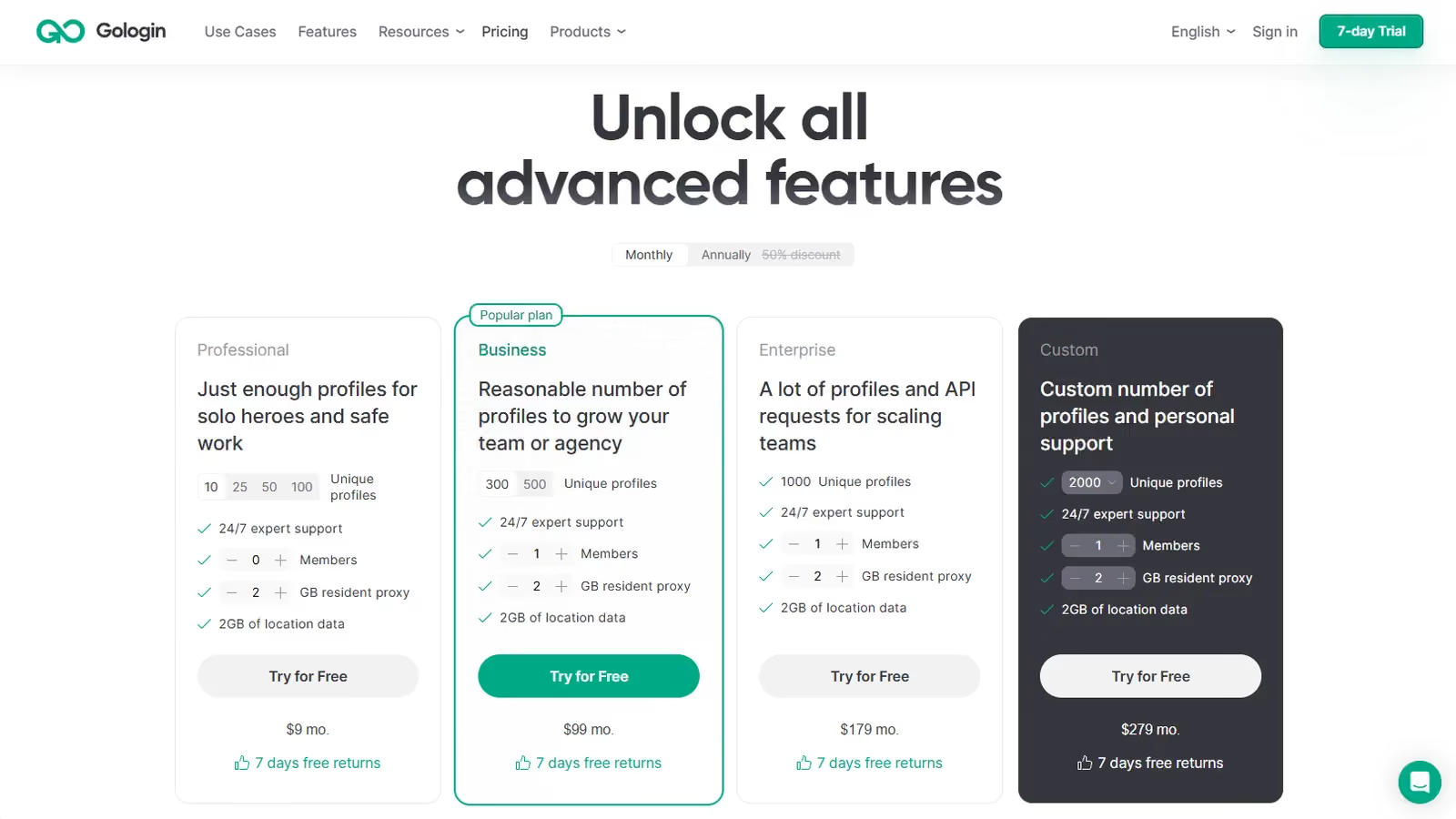
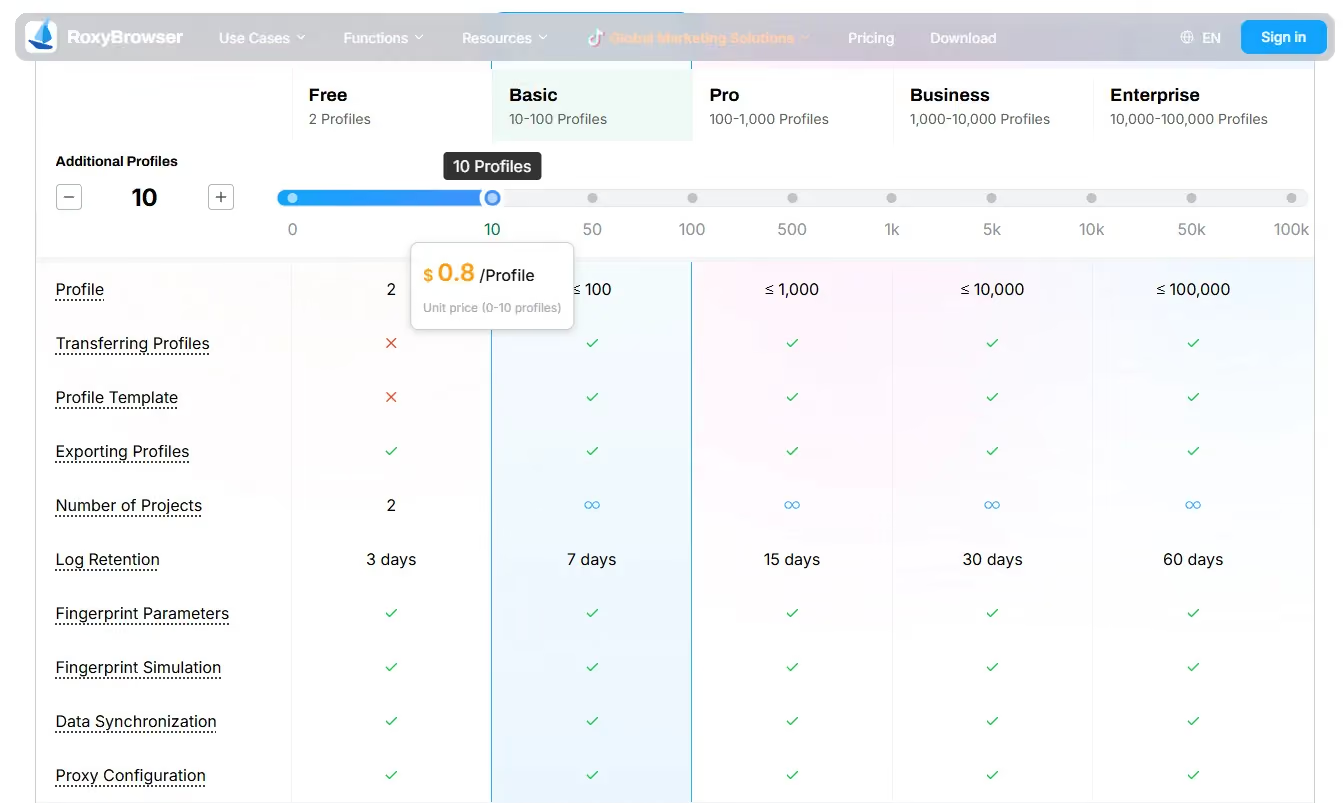
| Entry monthly price | $8 for 10 paid profiles | $9 for 10 profiles |
| Free access | 2 free profiles | 3 free profiles; Pro trial for 7 days |
| Desktop platforms | Windows, macOS and Linux | Windows, macOS and Linux |
| Proxy options | Easy external setup; RoxyIP sold separately | Integrated proxies and external support |
| Country of origin | Singapore | United States |
| Everyday use | Slow first use, loading errors and frequent popups | More responsive and easier to work in |
| Teamwork | $10 per additional team; $5 per member, paid once | Profile sharing and configurable member allowances |
| Cloud launch | No; profile data sync available | Yes |
| Mobile apps | No dedicated mobile app listed | Android, iPhone and iPad |
| Automation | Window Sync and local API | REST API |
RoxyBrowser vs Gologin: Which One is Better?
First impressions and interface
I tried RoxyBrowser to see how its low pricing, profile customization and Window Sync compared with Gologin. Downloading the installer was straightforward, but using the app was a different story. It took ages to load on first use, kept getting stuck and occasionally showed “failed to load resources.” That was a poor introduction to a tool I wanted to use for work.
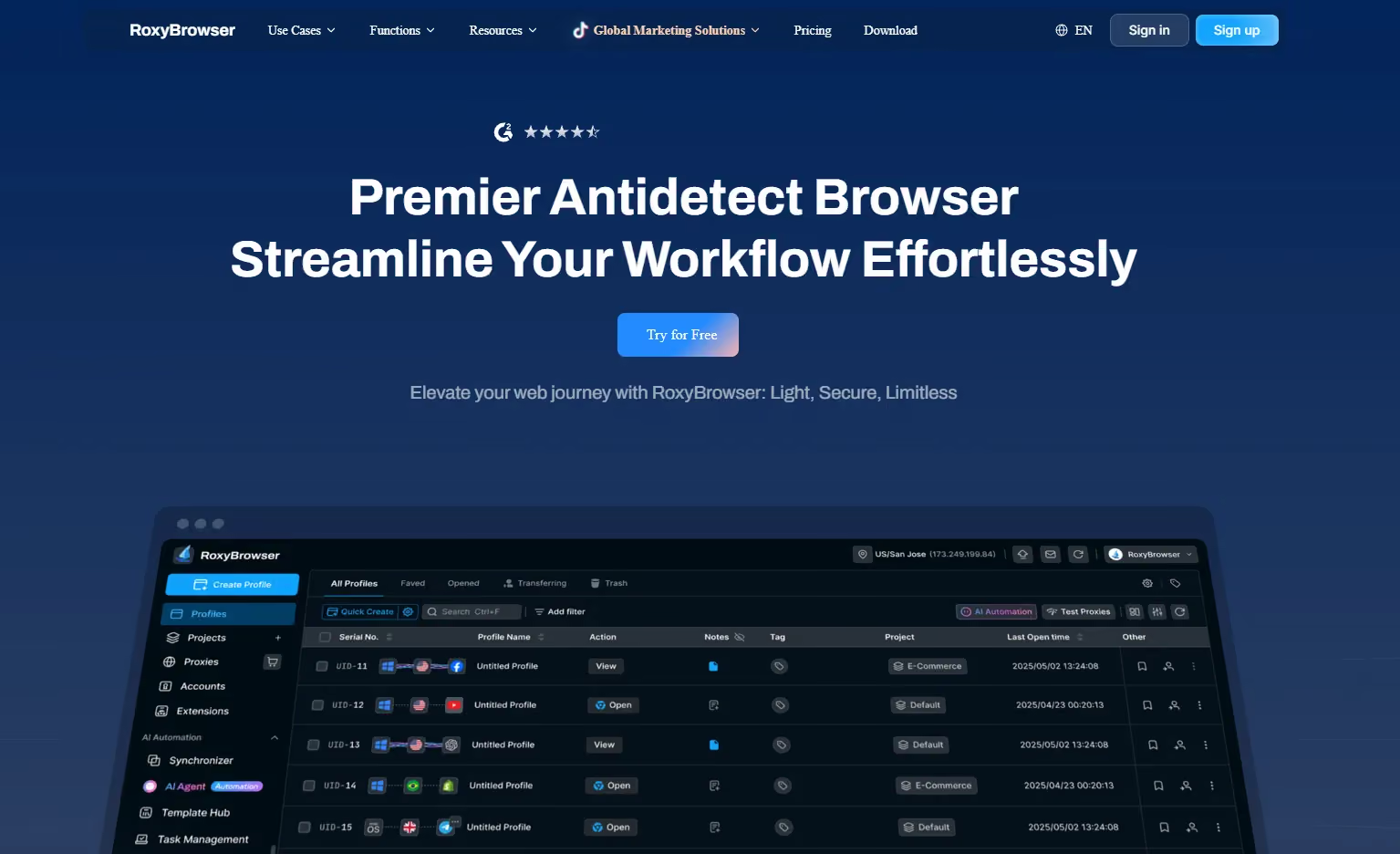
The interface itself is okay. I could see useful details beside each profile, including its operating system, proxy and assigned platform. Once I reached the dashboard, the layout was understandable. The problem was how slowly it responded.
I liked being able to use Display to choose which profile details appeared in the table. It gave me a useful overview without forcing every setting onto the screen. Gologin offered more flexibility, but Roxy’s layout was workable.
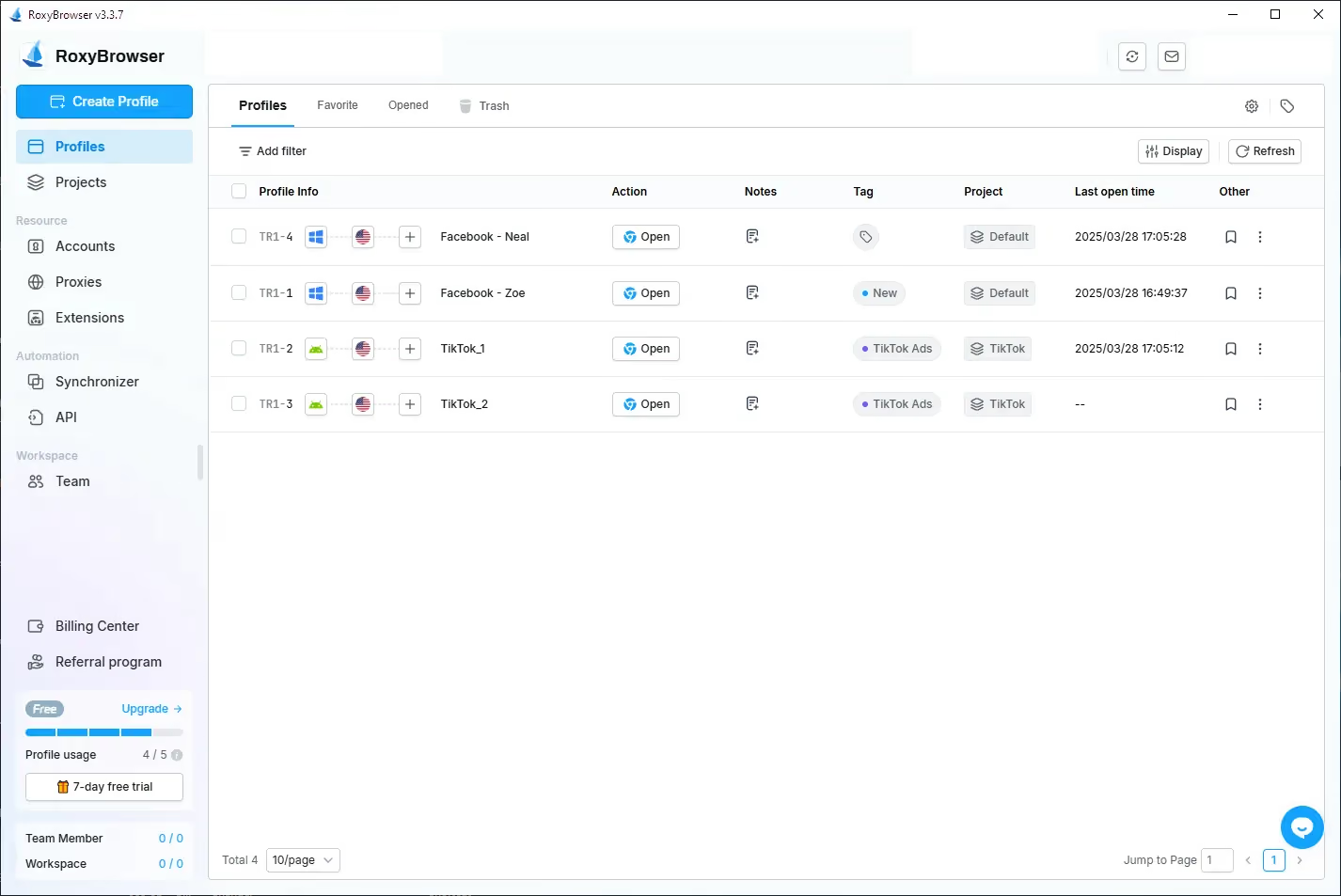
The delays affected ordinary tasks, not just the first loading screen. Adding tags and moving through the interface involved extra waiting. I found myself waiting for the app to catch up instead of getting on with the profile.
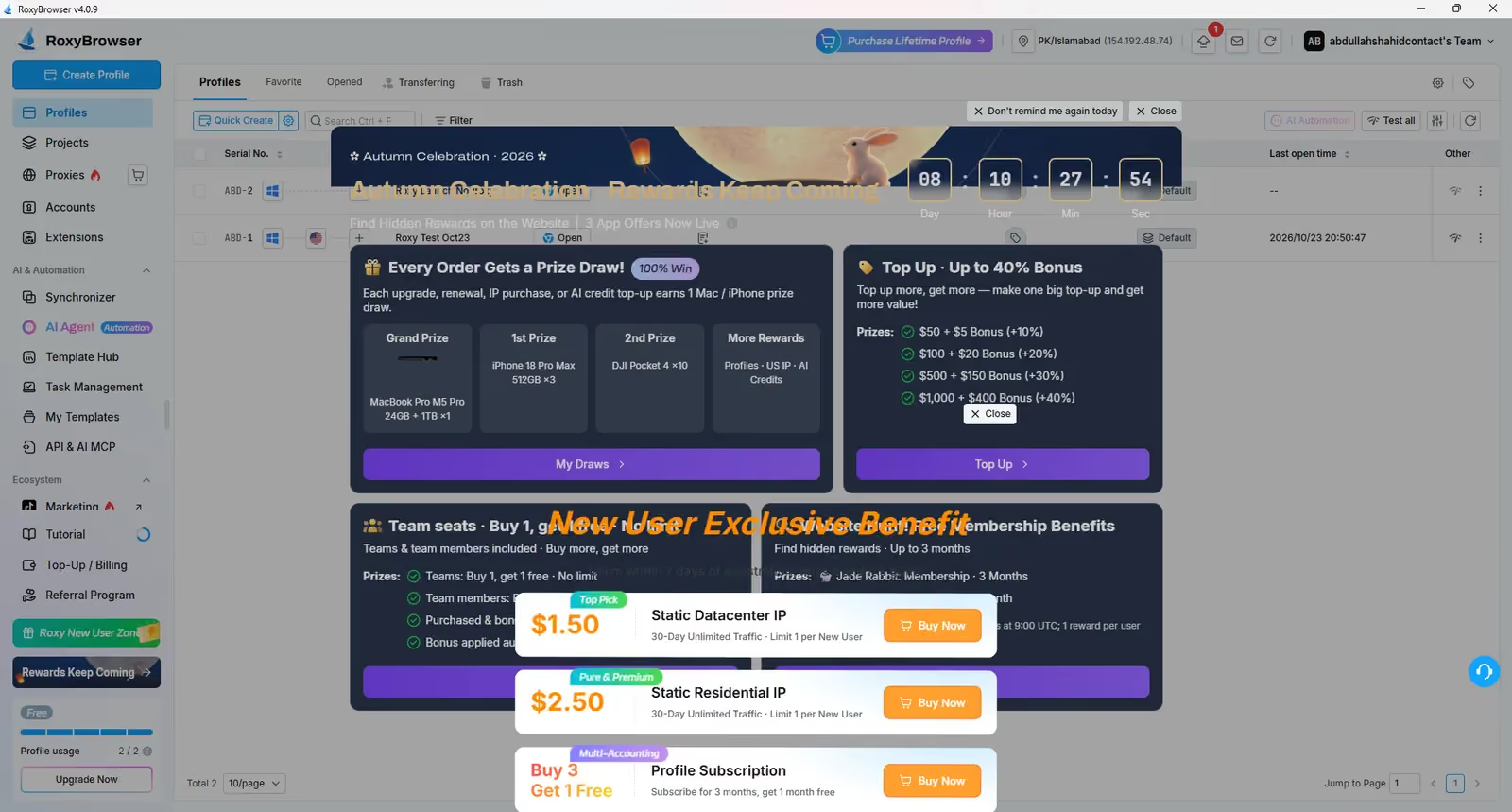
The promotional popups made this worse. Offers appeared when I opened the app and launched profiles, and the close buttons were difficult to find. I do not want to dismiss several sales messages every time I open a tool I am trying to work in.
Profile creation
Roxy’s profile creation screen is detailed. I could set up the profile, attach a proxy and work through its fingerprint options in the app. I liked having those controls in a graphical interface rather than needing a script.
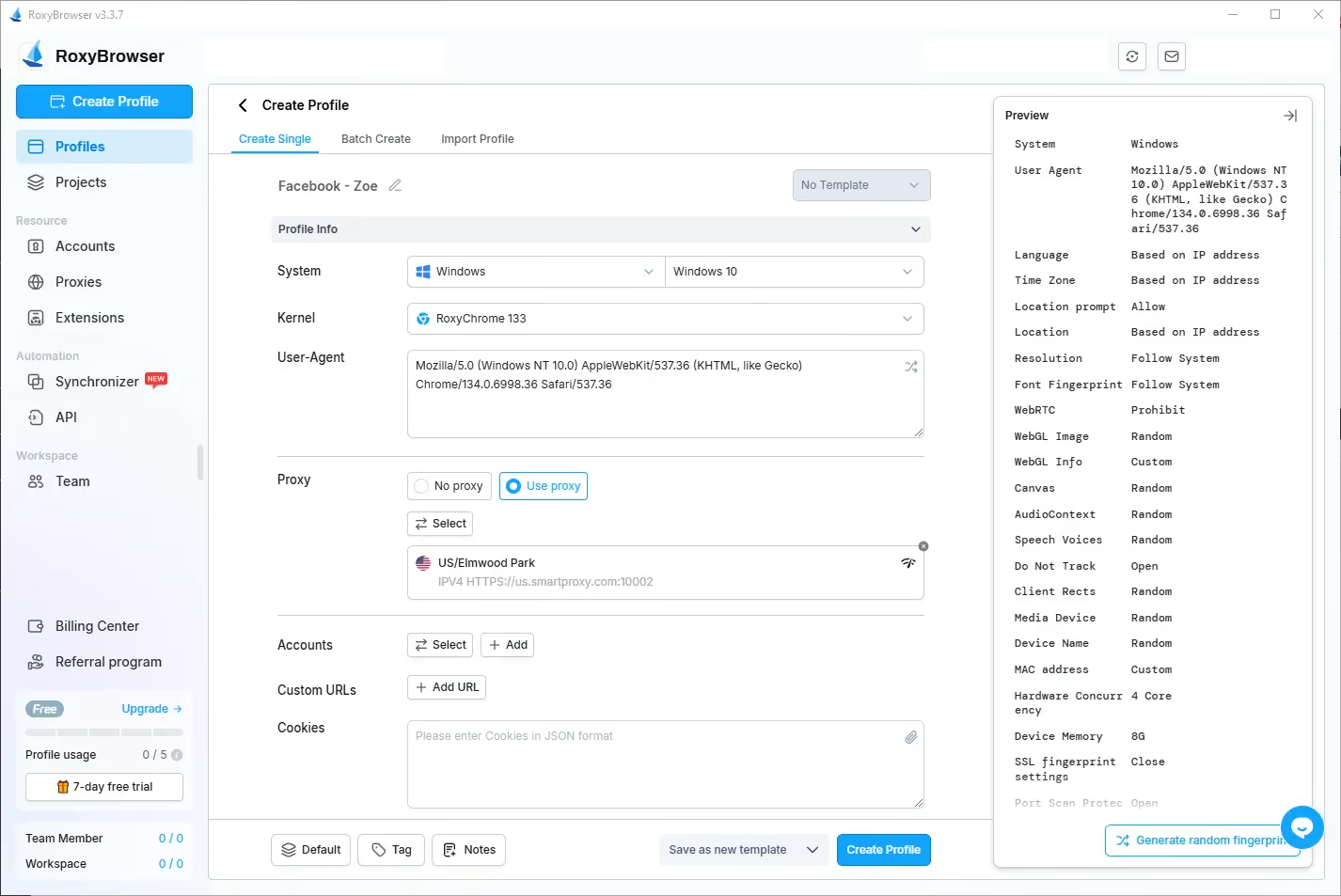
The Accounts section let me connect a profile with the account details I wanted to use. Profile templates were another useful option: I could save a setup and reuse it instead of entering the same choices again.
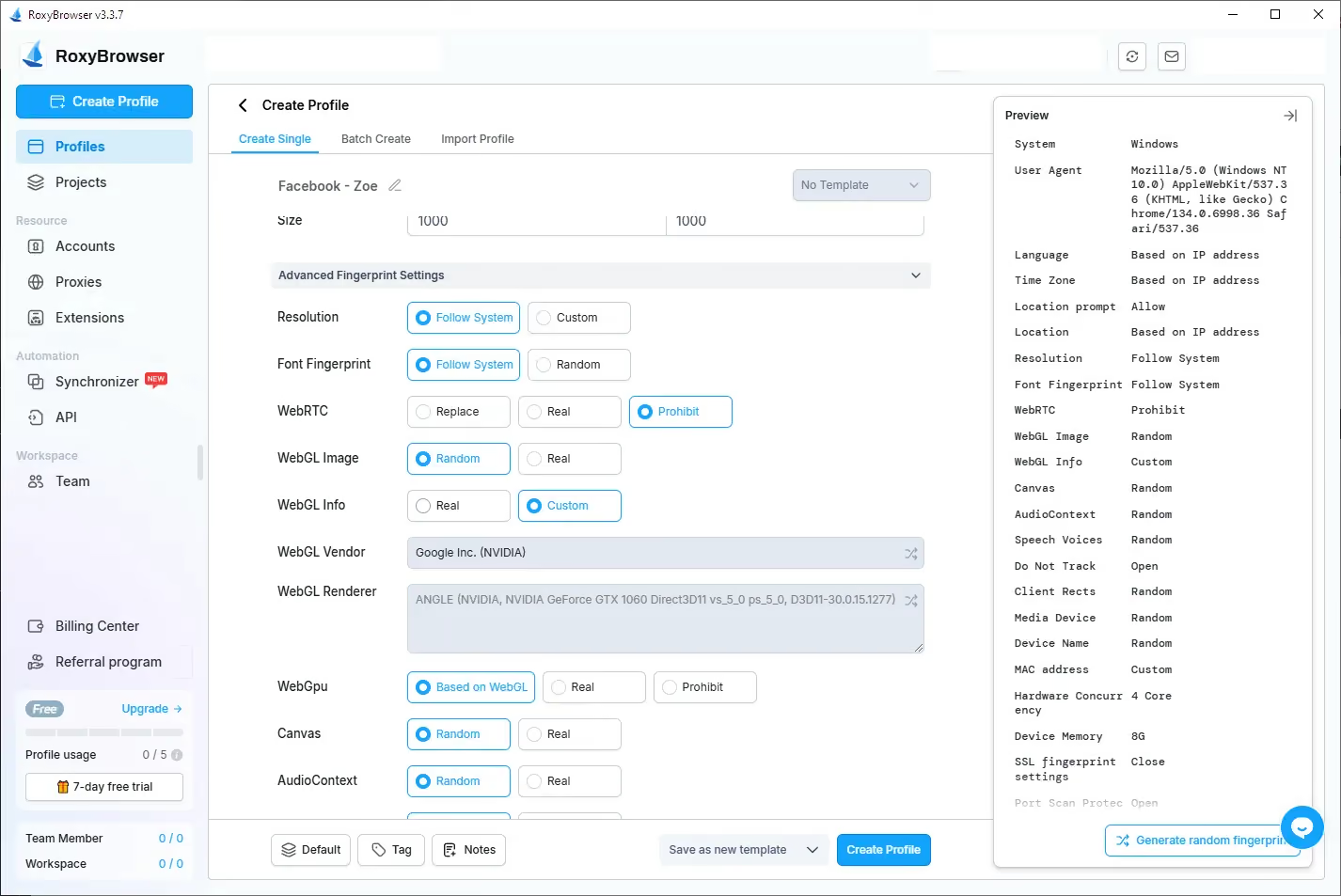
Advanced settings cover details such as hardware concurrency, device memory and canvas behavior. Proxy configuration was one of the better parts of my experience. I had no trouble adding my external FloppyData proxy, and I could check the connection during profile creation or manage proxies separately.
Extensions and Window Sync
I liked Roxy’s extension management. I could import extensions and apply them to the projects where I needed them. That is useful when different groups of accounts need different browser tools.
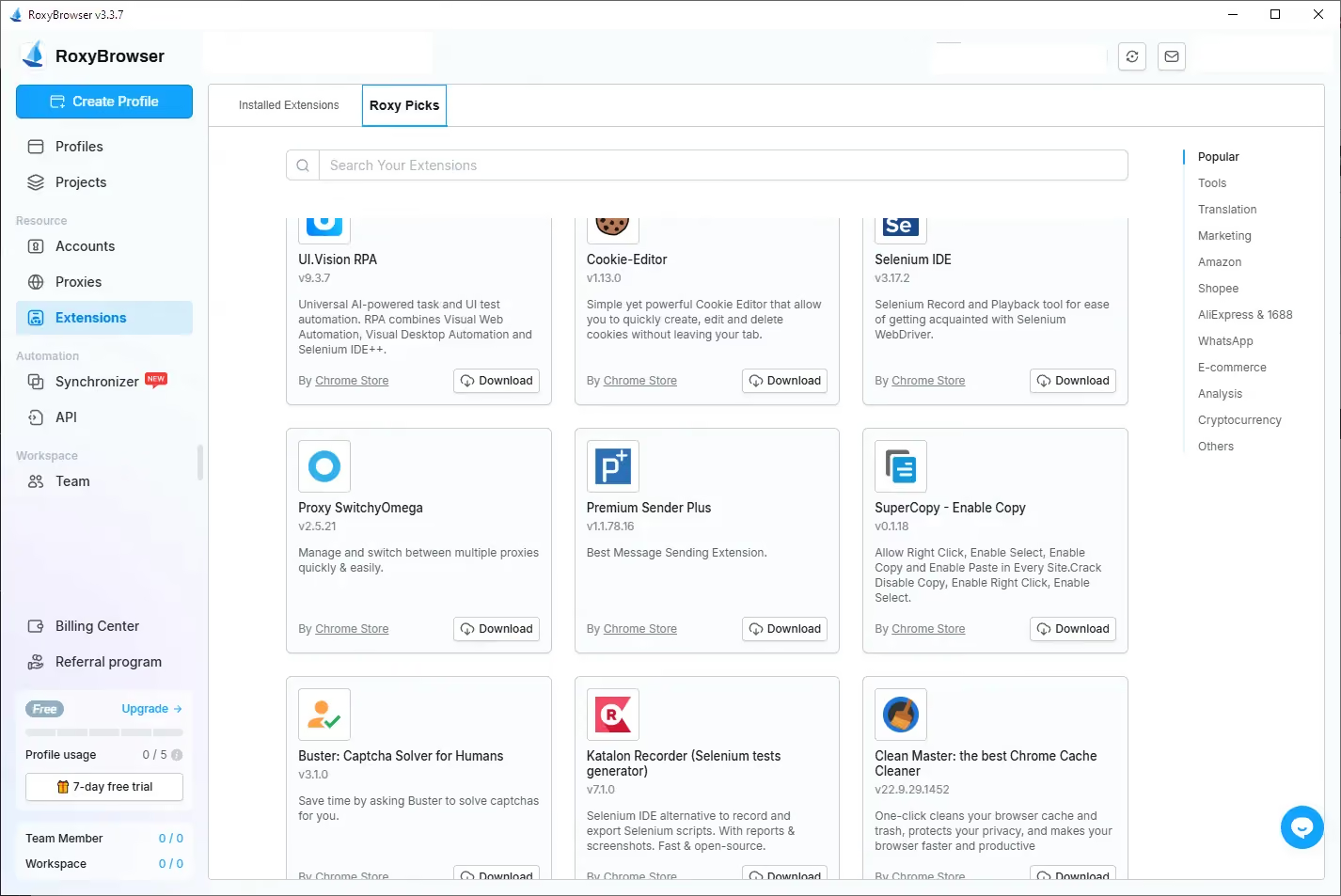
Roxy organizes profiles into Projects, which play a similar role to folders in Gologin. Assigning extensions by project made more sense to me than configuring them separately for every profile.
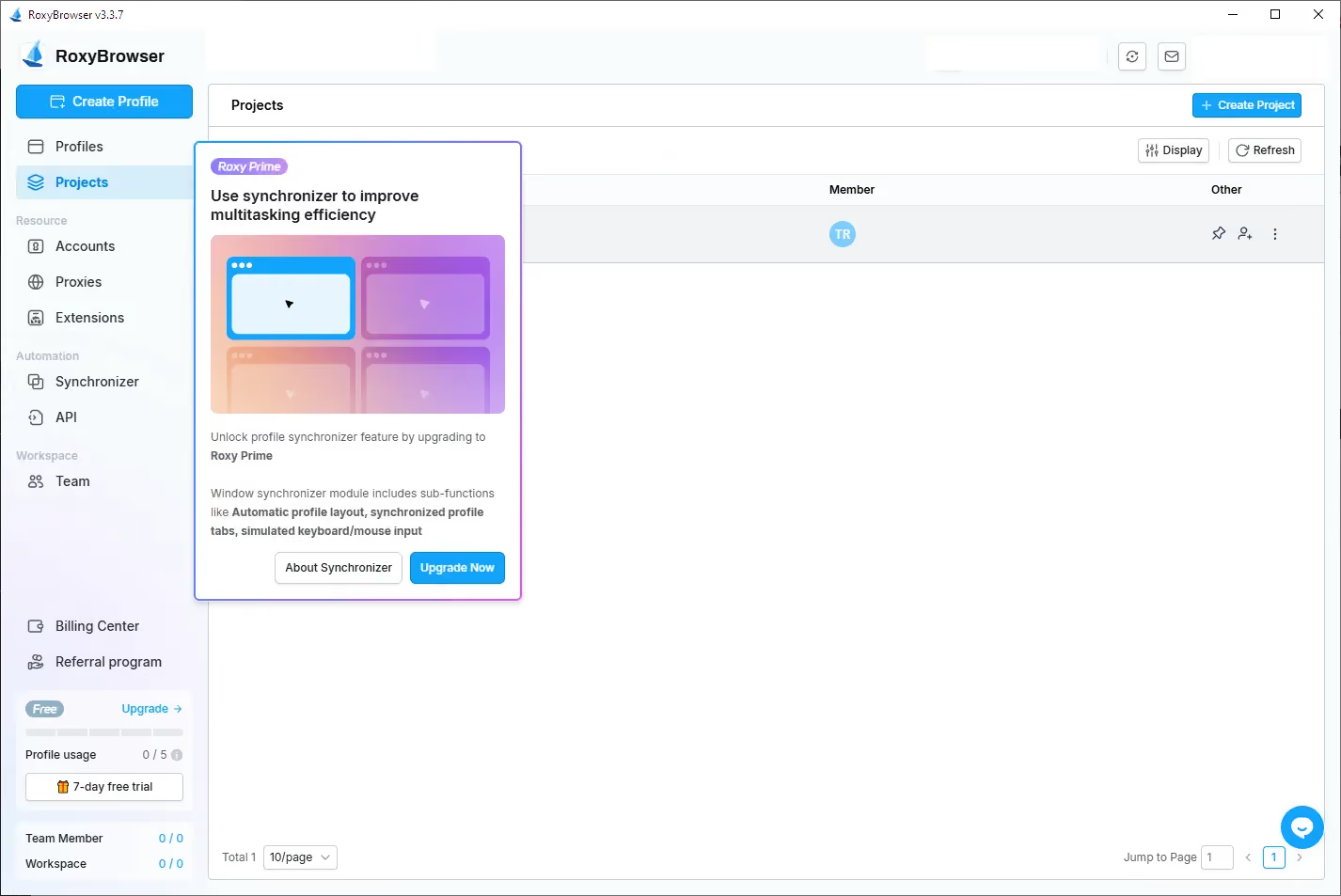
Window Sync is another useful feature. It repeats actions from one browser window in other selected windows, which can save time on repetitive work. I like having that option, but it is not unique to Roxy and it did not make the slow dashboard or repeated popups less annoying.
Fingerprint customization and checker results
Roxy gives me plenty of fingerprint settings, but the checker results were mixed. Pixelscan marked it Inconsistent, and Iphey rated it Unreliable at 40/100. On official CreepJS, both browsers recorded 0% headless and 0% tampering; Roxy showed 19% like headless, while Gologin ranged from 19% to 25% across recorded runs. The practical differences came from Pixelscan, Iphey and the workflow.
I also liked that adding an external proxy was straightforward. Roxy sells RoxyIP proxies in the app, but I prefer FloppyData when I need an external provider. Pixelscan did not detect my Roxy connection as a proxy; its warnings concerned the timezone and the fingerprint.
Documentation and support
Roxy has a User Guide, API documentation and a public changelog. Live chat and Telegram are listed as support options. Those resources are welcome, especially given how much time I spent dealing with the app’s initial problems.
I found Gologin easier to return to after using Roxy: fewer interruptions, a more responsive dashboard and a clearer profile workflow.
What Gologin Does Better than Roxy Browser
Roxy has enough features to look competitive on paper. Gologin’s advantage for me was how much easier those everyday tasks felt: creating profiles, adding proxies and moving around the dashboard.
Everyday use
Gologin’s onboarding and profile setup were easier to follow. I could create a profile through the dashboard and use its recommended defaults without spending time sorting through an unfamiliar set of options.
I also like Gologin’s integrated proxies. They are convenient when I want to get a profile running without arranging a separate provider, and I can still add a FloppyData proxy when I want to use my own connection. Roxy’s proxy setup was decent too; its performance and popups were the bigger problems for me.
Gologin’s profile also did better on Iphey: Trustworthy with an MX score of 100, compared with Roxy’s Unreliable result and score of 40. That result gave me more confidence in Gologin’s default setup.
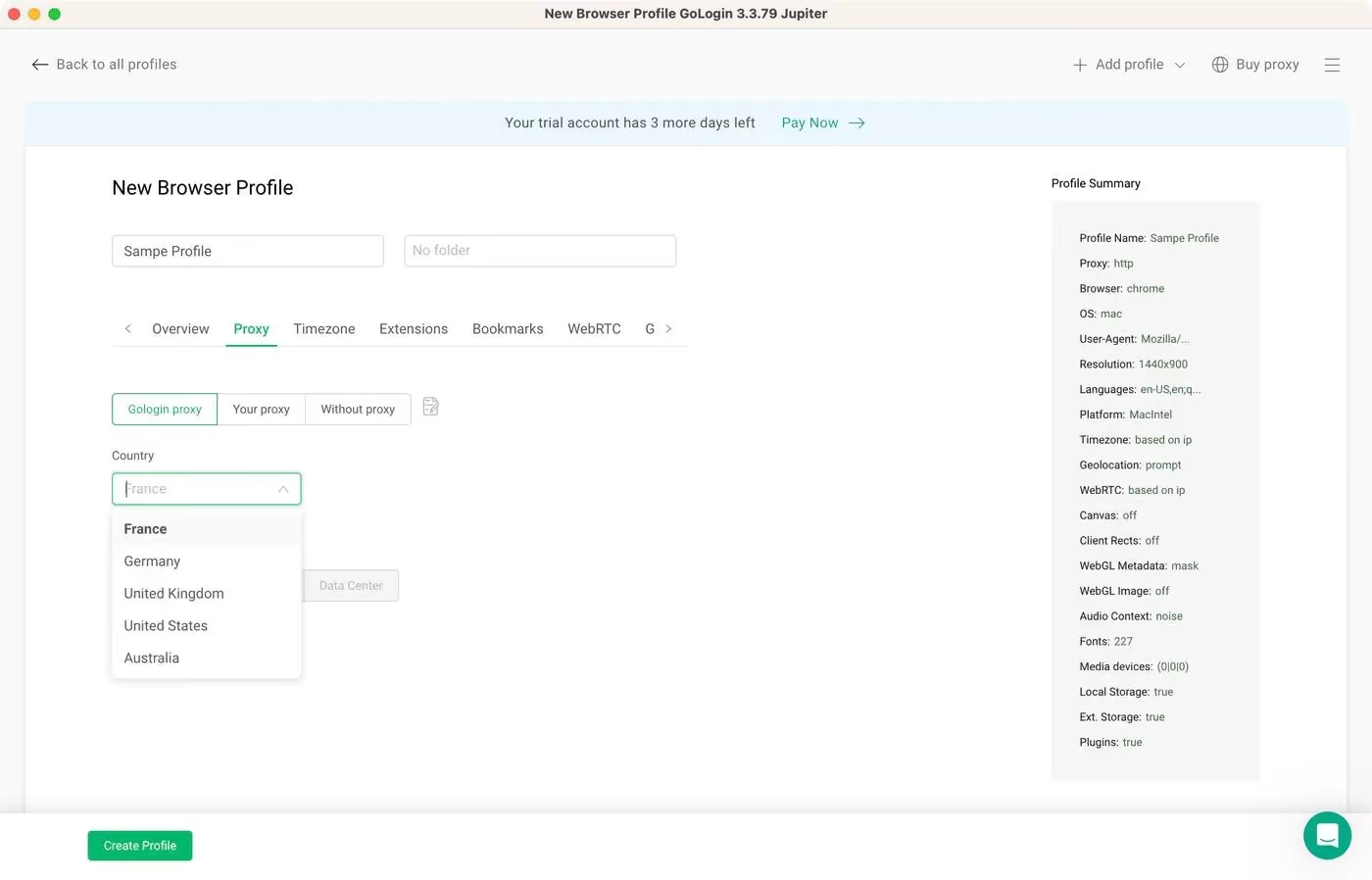
I could choose which profile details to show in Gologin’s dashboard, including proxy and sharing information. That helped me keep the overview useful without making it feel crowded.
Gologin felt more responsive in use. I could move between settings and profile actions with less waiting. After Roxy’s loading problems and promotional overlays, I appreciated being able to open the app and focus on the profiles.
Teamwork
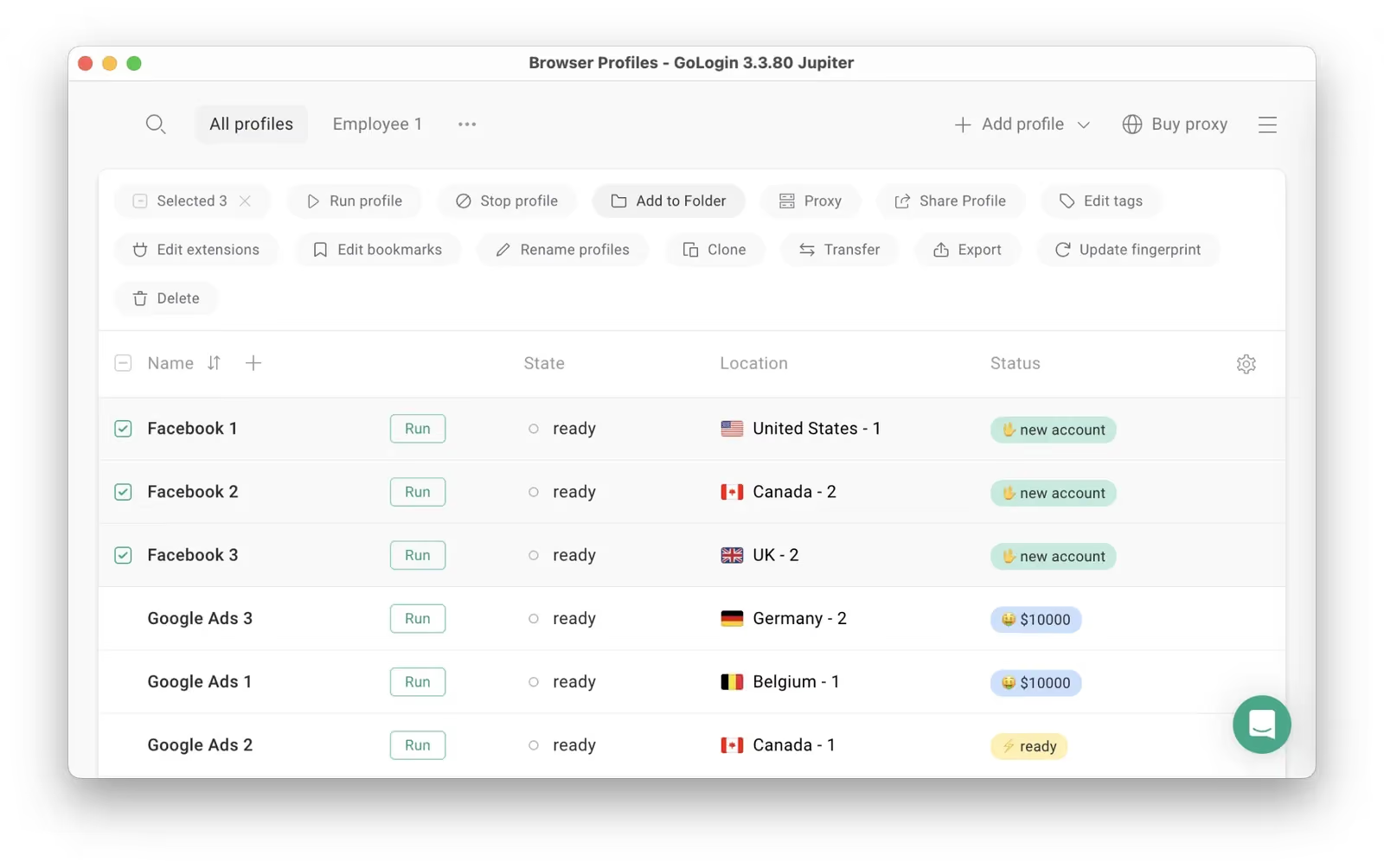
Gologin’s sharing and access controls are useful when several people work with the same profiles. Profiles and folders can be shared with different permissions, which is easier to manage than passing account details around.
For a team, I would compare the selected package’s sharing and member limits alongside the profile count. Roxy offers workspaces and team members too, and its official documentation says the additional team and member purchases are permanent rather than recurring monthly charges.
Platform support
Roxy supports Windows, macOS and Linux, with Ubuntu Desktop 22.04 or later listed for its Linux build. Gologin supports all three desktop systems and also has Android and iPhone/iPad apps.
Gologin’s cloud browser is another useful difference: I can launch profiles through its web service. Roxy’s cloud synchronization keeps profile data in sync, but its browser launch workflow still uses the desktop application.
Gologin vs RoxyBrowser: Pricing and plans in 2026
I can start Roxy at $8 for 10 paid profiles, compared with $9 per month for Gologin. With longer billing, Gologin costs $4.50 per month annually versus Roxy’s $4.80 for 360 days.
Gologin costs more at the entry level, but I value its saved profiles, cloud profile access and smoother workflow. Included proxy traffic is available in eligible configurations and can reduce the need for a separate proxy service; it is not part of every plan.
| Pricing (USD) | RoxyBrowser | Gologin |
|---|---|---|
| Free profiles | 2 | 3 |
| 10 profiles: monthly | $8 per 30 days | $9 per month |
| 10 profiles: long term rate | $4.80/mo; billing for 360 days | $4.50/mo; annual billing |
| 1,000 profiles: monthly | $148 | $179 |
| 1,000 profiles: long term rate | $88.80/mo; billing for 360 days | $89.50/mo; annual billing |
| Team extras | $10/additional team; $5/member, paid once | Configurable by package |
Testing: RoxyBrowser vs Gologin
On October 23, 2026, I ran Pixelscan, Iphey and the official CreepJS page three times per browser. Both used fresh profiles and the same rotating US residential FloppyData proxy URL; exits could vary.
RoxyBrowser test results
Across all 3 tests, Pixelscan returned Inconsistent with timezone and fingerprint flags. That means the checker saw mismatches in the browser’s presented environment rather than a clean, self-consistent profile. Gologin performed better here, returning Consistent with no proxy or automation flags.
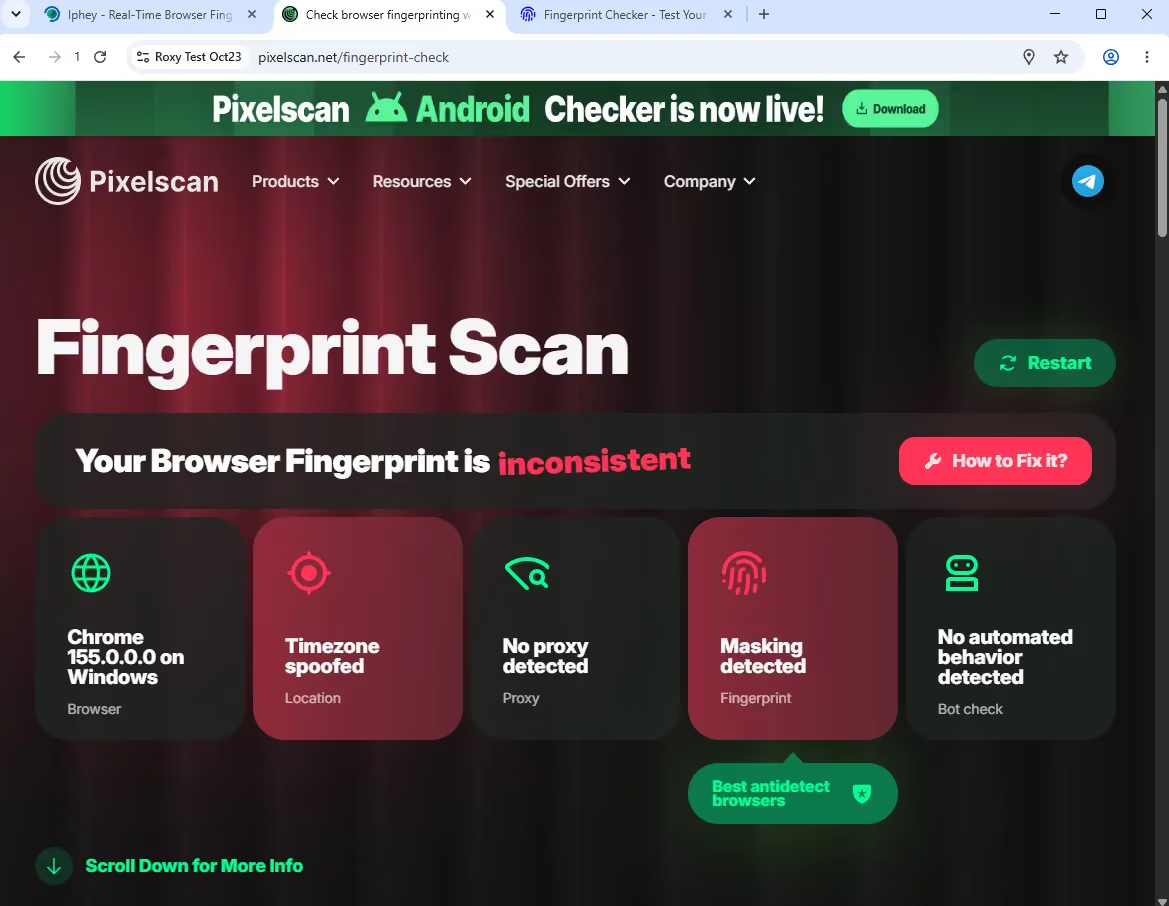
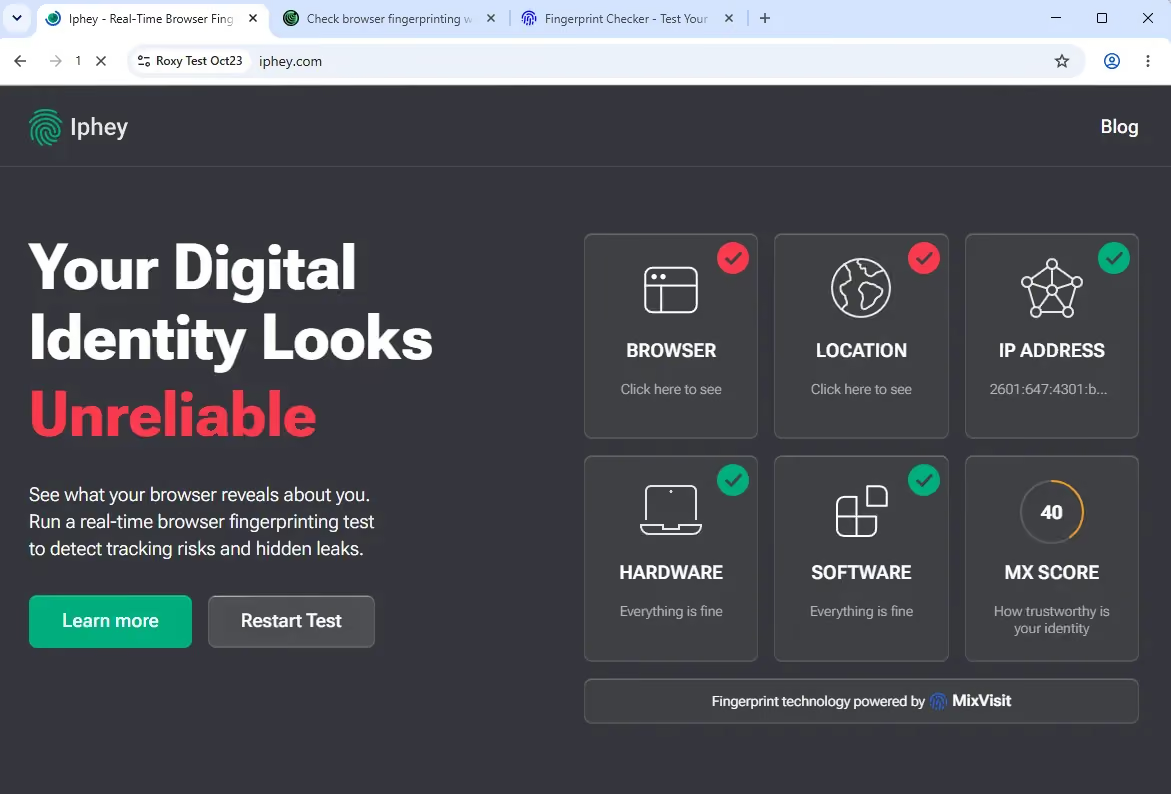
Iphey returned Unreliable with an MX score of 40/100. The low score reduced my confidence in Roxy’s default identity alignment, especially next to Gologin’s Trustworthy 100/100 result. This was the largest difference between the two browsers in the test set.
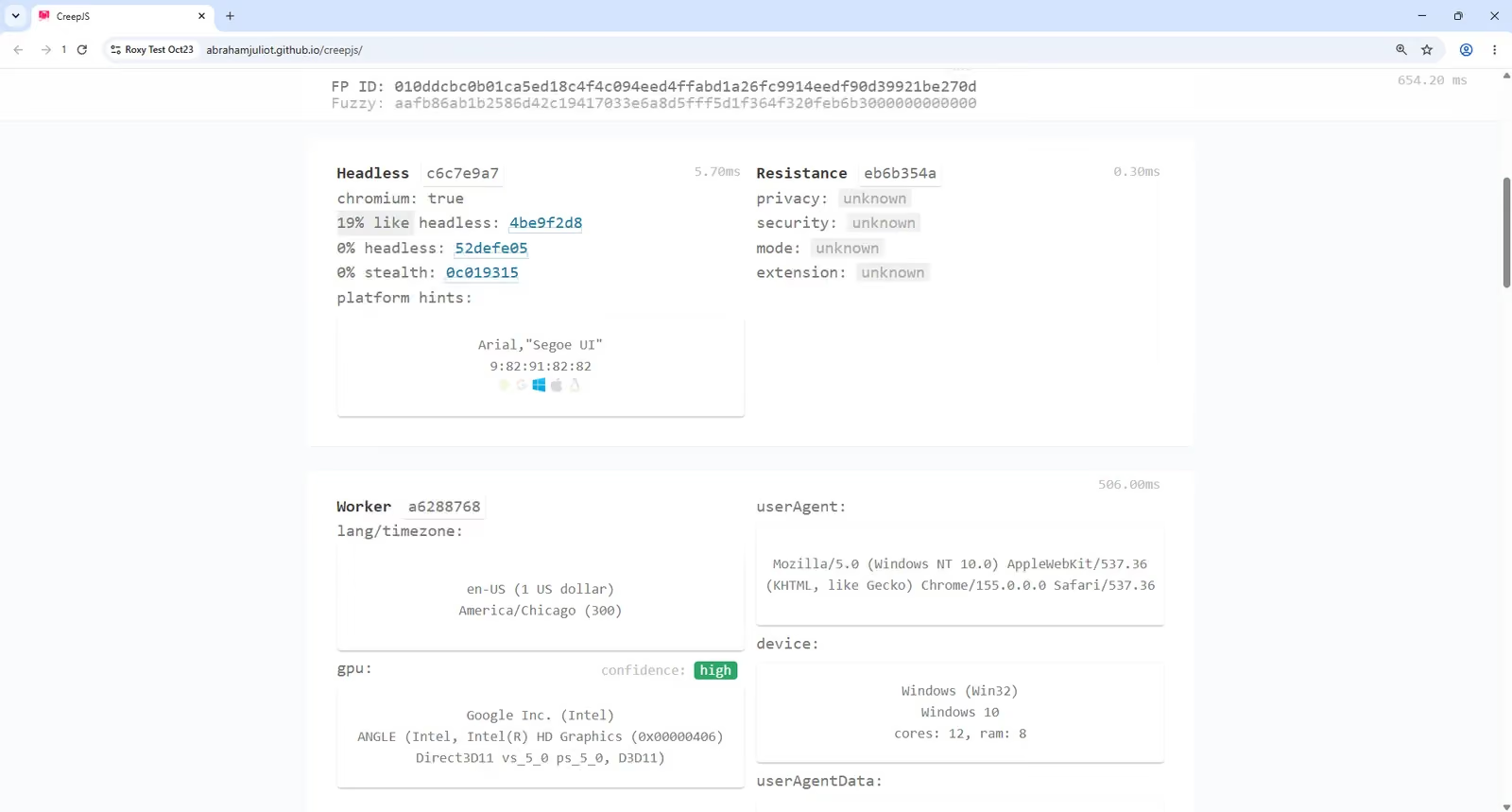
Official CreepJS reported 0% headless, 0% tampering and 19% like headless. The 19% came from light color preference and unavailable Content Index and Contacts Manager APIs, not a headless or tampering verdict.
Gologin test results
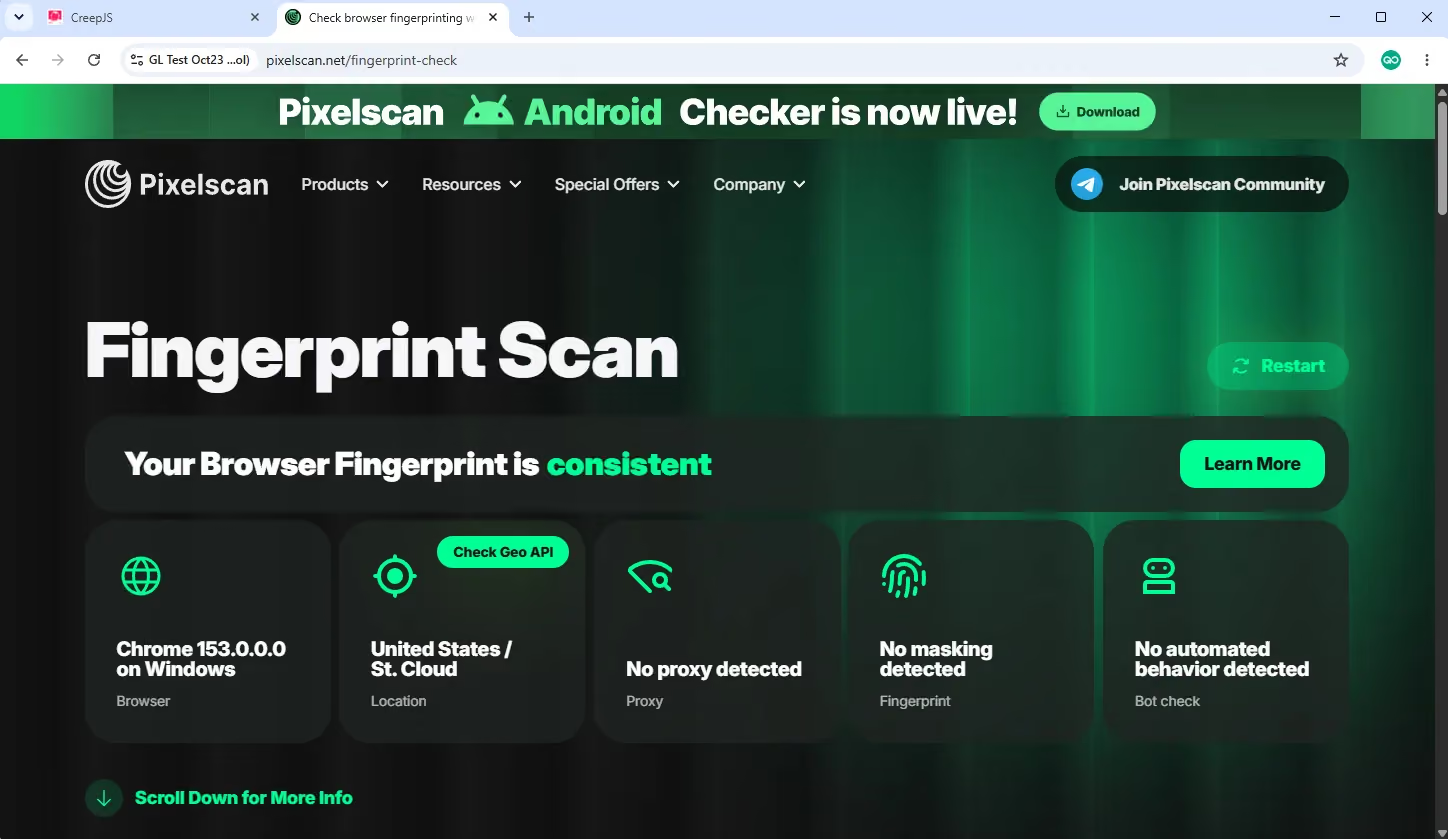
Across all 3 tests, Pixelscan returned Consistent with no proxy or automation flags. The IP, WebRTC and timezone values aligned in the recorded run, whereas Roxy received timezone and fingerprint flags. This gave Gologin the clearer Pixelscan result.
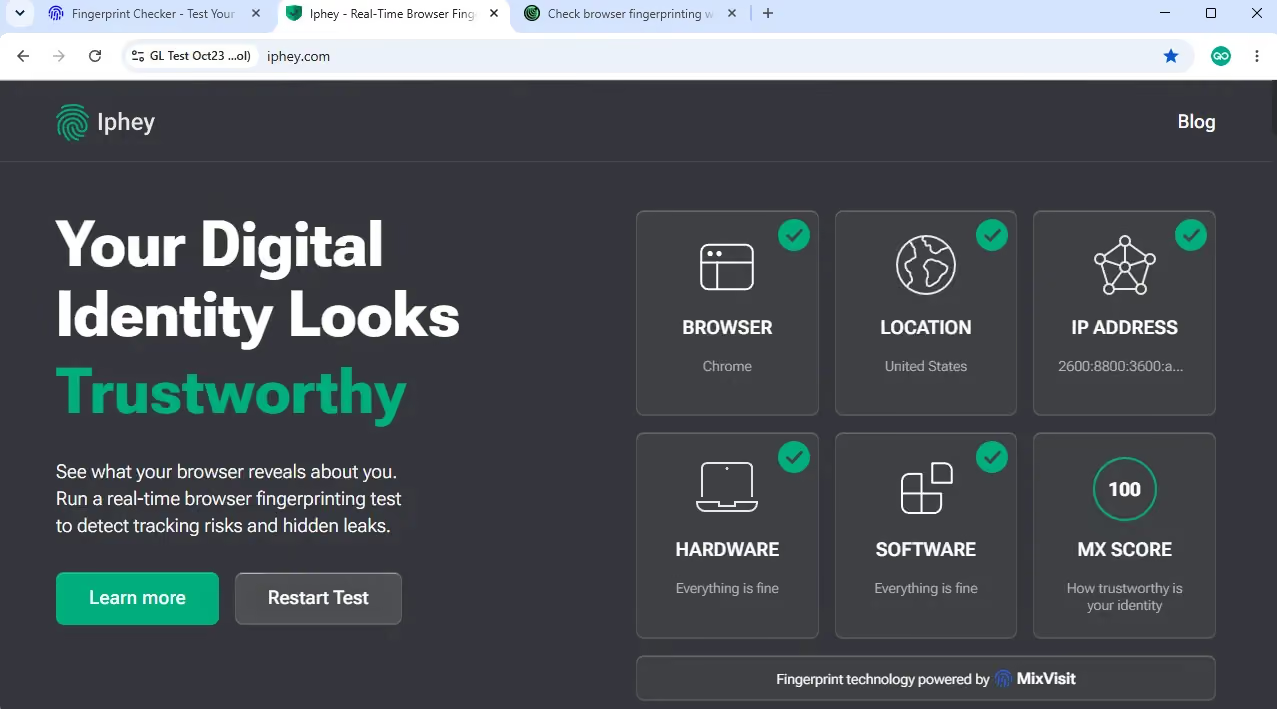
Iphey returned Trustworthy with an MX score of 100/100. That was a 60-point advantage over Roxy’s Unreliable 40/100 result and made the Gologin profile look more internally consistent to this checker. Of the three tools, Iphey created the sharpest separation.
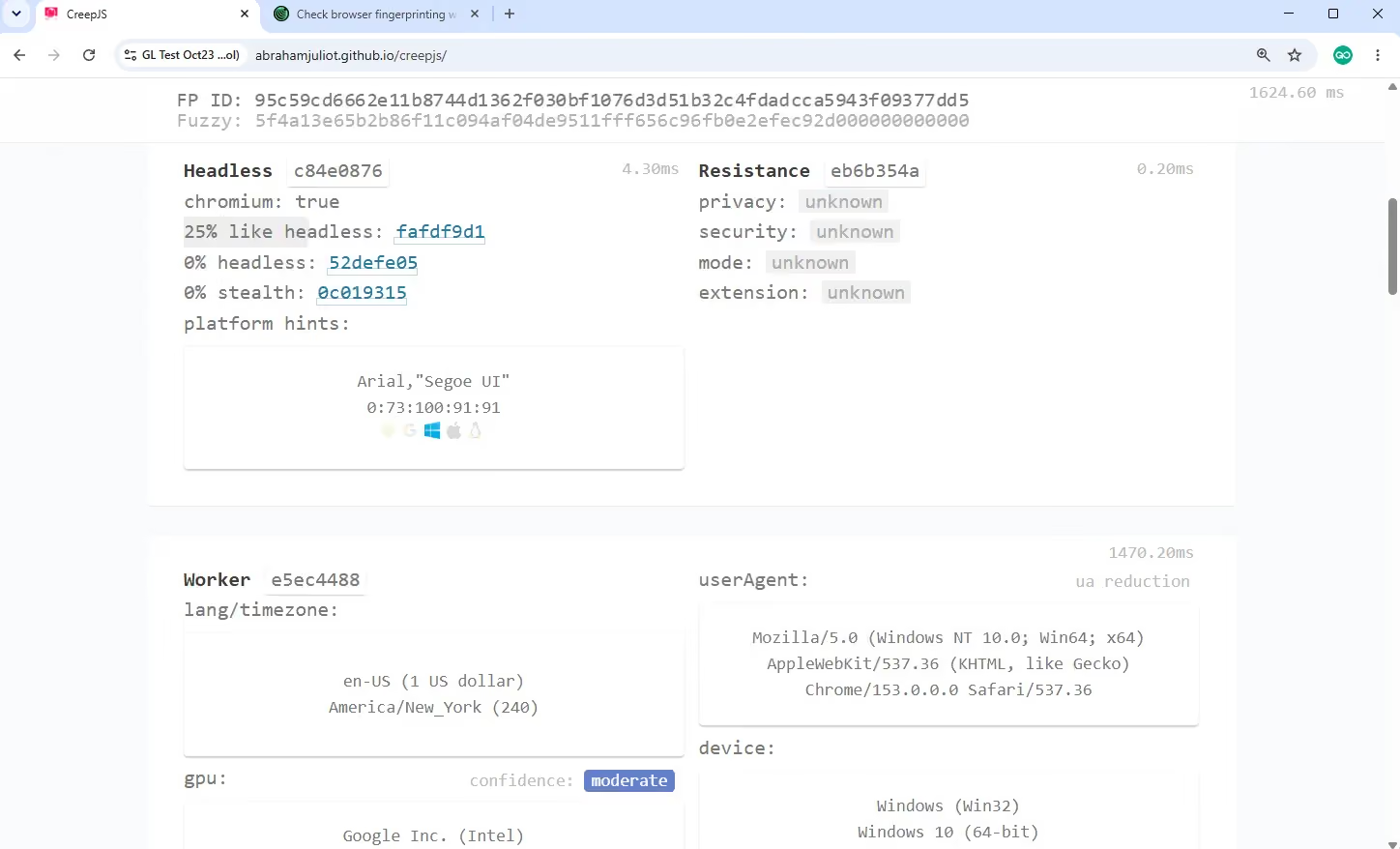
Across the recorded Gologin runs, official CreepJS reported 0% headless, 0% tampering and 19% to 25% like headless (across 3 tests). Roxy recorded 19%, so CreepJS was much less decisive than Pixelscan or Iphey in this comparison.
Comparison
| Test | RoxyBrowser | Gologin |
|---|---|---|
| Pixelscan | Inconsistent; timezone and fingerprint flags | Consistent; no flags |
| Iphey | Unreliable, 40/100 | Trustworthy, 100/100 |
| Official CreepJS | 0% headless; 0% tampering; 19% like headless | 0% headless; 0% tampering; 19% to 25% like headless |
Gologin vs RoxyBrowser: Pros and cons
| RoxyBrowser pros | RoxyBrowser cons |
|---|---|
| The $8 monthly entry price is affordable for a small setup with 10 paid profiles. | The app loaded slowly, got stuck and sometimes showed resource loading errors during my first use. |
| I added my FloppyData proxy through the interface without any trouble. | Repeated promotional popups interrupted my work, and their close buttons were difficult to find. |
| Window Sync gives me a useful way to repeat actions across several browser windows. | Pixelscan marked my default profile Inconsistent over the timezone and the fingerprint. |
| Official CreepJS reported 0% headless, 0% tampering and 19% like headless. | Iphey rated my profile Unreliable with a score of 40/100, which reduced my confidence. |
| Gologin pros | Gologin cons |
|---|---|
| The dashboard felt more responsive, making everyday profile management easier for me. | The monthly entry price is $9, which is $1 more than Roxy for 10 profiles. |
| My default profile scored 100/100 on Iphey and received a Trustworthy verdict. | Official CreepJS ranged from 19% to 25% like headless across recorded Gologin runs; this is not an overall safety score. |
| I like the convenience of choosing an integrated proxy directly inside the app. | On test day, Gologin reported an older Chrome core than Roxy: 153 versus 155. |
| Cloud launches let me access profiles through the web when I am away from the desktop app. | The entry pricing configuration has no team members selected, so shared access needs a different selection. |
My honest take: RoxyBrowser vs Gologin
As you can see from both the table and our review, RoxyBrowser is among the more promising Gologin alternatives we’ve reviewed. Its UI isn’t hard to master, profile creation is comprehensive, and Synchronization is a stand-out feature with a lot of potential.
Roxy has things I like: detailed profile settings, straightforward proxy support, extension management and Window Sync. It also reported a newer Chrome core. On official CreepJS, both browsers recorded 0% headless and 0% tampering; Roxy showed 19% like headless, while Gologin ranged from 19% to 25% across recorded runs. Those are useful context, not proof of invisibility.
What put me off was the experience of using it. The app took too long to become usable, kept getting stuck and repeatedly showed offers that were awkward to close. Then Pixelscan marked the fingerprint Inconsistent and Iphey gave it an MX score of 40. That combination made it hard for me to prefer Roxy for everyday account management.
Gologin felt easier to work in. I could create a profile, add a proxy and get on with the task without the same interruptions. I also like its integrated proxies, while keeping FloppyData as my choice when I want an external provider.
If I were switching away from Roxy, I would start with Gologin’s three free profiles or trial for seven days. That is enough to get a feel for the dashboard, proxy setup and everyday profile workflow before choosing a paid plan.
My pick is Gologin. Its Trustworthy Iphey result and MX score of 100 gave me more confidence in the default profile, and I preferred its more responsive workflow. I would consider Roxy for Window Sync or a budget profile setup, but its initial performance and popups were significant drawbacks for me.
RoxyBrowser FAQ
How much does RoxyBrowser cost?
Roxy uses profile pricing. The entry selection of 10 paid profiles costs $8 per 30 days, or $4.80 per month equivalent when paid for 360 days with the 40% discount. Additional teams cost $10 and members $5 as single purchases.
Is RoxyBrowser free?
Yes. Roxy’s free plan includes two profiles and two projects. Its live calculator shows the free allowance alongside the paid profile selection.
Is RoxyBrowser safe and legit?
RoxyBrowser has official downloads, documentation and a public changelog. Its site advertises fingerprint isolation and account protection, but my default profile received timezone and fingerprint flags on Pixelscan and an Unreliable verdict on Iphey. I preferred Gologin’s profile, which scored 100/100 on Iphey.
Is RoxyBrowser available on Linux?
Yes. Roxy has Windows, macOS and Linux downloads. Its official Linux requirement is Ubuntu Desktop 22.04 or later.
What are the best RoxyBrowser alternatives?
I would compare Gologin, Camoufox, Kameleo, BitBrowser and DICloak. Gologin is my preference for everyday profile management; Camoufox is more relevant when I specifically want a workflow that I automate through code.
RoxyBrowser vs Gologin: which is better?
I prefer Gologin. Roxy had a newer Chrome core, but both browsers recorded 0% headless and 0% tampering on official CreepJS; Roxy showed 19% like headless, while Gologin ranged from 19% to 25% across recorded runs. Gologin did much better on Iphey and was easier for me to use. Roxy’s slow loading and repeated promotional popups also made a poor first impression.